
Maldives
National Flag of Maldives
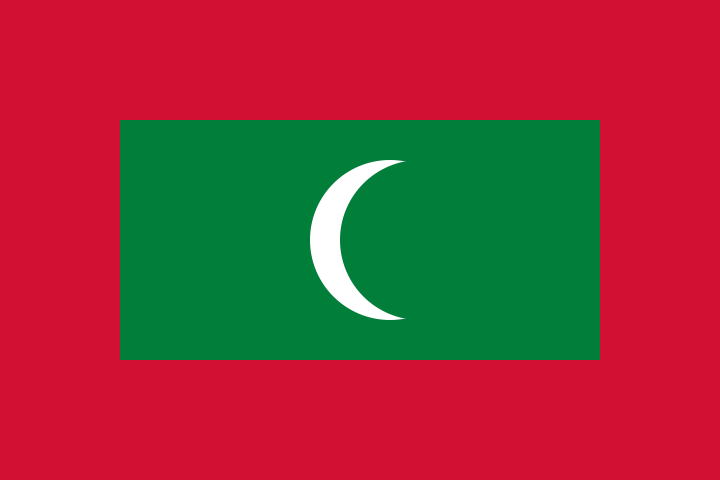
🇲🇻 Country Profile: Maldives
🌍 Introduction
Maldives is an island country in the Indian Ocean, known for its coral atolls, low-lying islands, and marine ecosystems. Located southwest of Sri Lanka and India, it consists of a chain of small islands spread across a wide ocean area. Its geography is defined by reefs, lagoons, and sandy islands, making it one of the world’s most distinctive island environments.
📌 General Overview
Official Name: Republic of Maldives.
Capital: Malé.
Official Language: Dhivehi.
Government Type: Presidential republic.
Currency: Maldivian Rufiyaa (MVR).
Time Zone: Maldives Time (MVT).
🗺️ Country-Specific Maps
Political maps show national maritime boundaries and island groups. Administrative maps present atolls and island jurisdictions. Physical maps highlight coral atolls, reefs, and lagoon systems. Marine maps show bathymetry and reef structures. Transportation maps display sea routes, airports, and inter-island connections. Thematic maps often include reef zones, tourism islands, and environmental sensitivity areas.
👥 Demography & Population
Maldives has an estimated population of about half a million people. The largest population center is Malé, along with nearby urban islands. Many islands have small communities, while others are dedicated to tourism. Population distribution is shaped by island size, services, and transport access.
🏛️ Administrative Divisions
Maldives is divided into administrative atolls and cities. Each atoll includes multiple inhabited and uninhabited islands. Local island councils manage community administration and services.
💰 Economy & Industries
The economy is driven mainly by tourism, fisheries, and related services. Resort tourism is the leading source of foreign income. Fishing, especially tuna, is a traditional and important industry. Transport, construction, and hospitality services also contribute significantly.
🌟 Places of Interest & Tourism
Notable places include coral reef resorts, dive sites, marine protected areas, and cultural sites in Malé. Clear lagoons, reef ecosystems, and beach islands are the main tourism attractions. Water-based recreation and marine exploration are key visitor activities.
🚆 Transportation & Connectivity
Transportation is primarily by boats and seaplanes between islands and atolls. Domestic airports operate on several islands, along with the main international airport near the capital. Sea routes form the backbone of national connectivity. Transport maps emphasize marine corridors and island links.
🌦️ Climate & Geography
Maldives has a tropical maritime climate with warm temperatures year-round and seasonal monsoon rainfall. The terrain is extremely low-lying, with most land only a few meters above sea level. Coral reefs and lagoons dominate the physical geography.
📜 History & Culture
Maldives has a history shaped by Indian Ocean trade routes and maritime culture. Cultural traditions include seafaring practices, crafts, music, and Islamic heritage. Island community life and ocean-based livelihoods are central cultural features.
📌 Quick Facts & Trivia
Maldives is one of the lowest-lying countries in the world by elevation. It is made up of hundreds of coral islands grouped into atolls. Tourism resorts often occupy separate islands. Marine biodiversity is a major natural asset. Sea transport is essential for daily life and logistics.
Downloads
Download JSON file Download KML file Download Shapefile Download FlagTopics covered