
Ghana
National Flag of Ghana
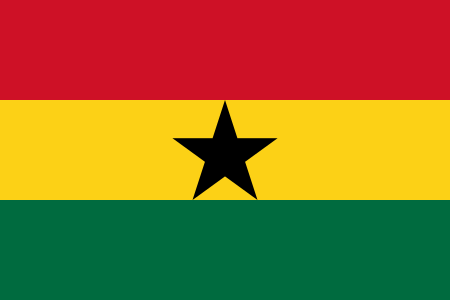
🇬🇭 Country Profile: Ghana
🌍 Introduction
Ghana is a West African country known for its Atlantic coastline, forest and savanna landscapes, and historic trading centers. Located along the Gulf of Guinea, it serves as a regional hub for commerce and culture. Its geography includes coastal plains, forest belts, rolling uplands, and large inland water bodies.
📌 General Overview
Official Name: Republic of Ghana.
Capital: Accra.
Official Language: English.
Government Type: Presidential republic.
Currency: Ghanaian Cedi (GHS).
Time Zone: Greenwich Mean Time (GMT).
🗺️ Country-Specific Maps
Political maps show regional boundaries, major cities, and international borders. Administrative maps present regions, districts, and metropolitan areas. Physical maps highlight forest zones, savannas, uplands, and coastal plains. Hydrology maps show major rivers and Lake Volta. Transportation maps display highways, rail corridors, ports, and airports. Thematic maps often include land use, climate zones, and resource areas.
👥 Demography & Population
Ghana has an estimated population of over 30 million people. Major cities include Accra, Kumasi, and Tamale. Population distribution is higher in the southern and central regions. Urbanization is increasing, especially around major cities. Many communities also live in rural farming areas.
🏛️ Administrative Divisions
Ghana is divided into regions, which are further subdivided into districts and metropolitan areas. Regional capitals serve as administrative and service centers. District assemblies manage local governance and development.
💰 Economy & Industries
The economy is supported by services, industry, mining, and agriculture. Key sectors include gold mining, cocoa production, oil and gas, and manufacturing. Agriculture includes cocoa, maize, and root crops. Trade and port services are important contributors.
🌟 Places of Interest & Tourism
Notable places include historic coastal forts and castles, national parks, cultural centers, and lake regions. Heritage towns and forest reserves are major attractions. Cultural and eco-tourism are both important.
🚆 Transportation & Connectivity
Transportation infrastructure includes highways, rail lines, seaports, and airports. Major ports handle regional trade. Rail corridors connect mining and inland regions to the coast. Road networks link all regional capitals.
🌦️ Climate & Geography
Ghana has a tropical climate with wet and dry seasons. Southern areas are more humid, while northern regions are drier savanna. Rainfall patterns vary by region. Terrain ranges from coastal plains to forested uplands.
📜 History & Culture
Ghana has a long history of powerful regional kingdoms and international trade links. Cultural traditions include music, festivals, crafts, and textiles. Historic states and trading centers shaped national heritage.
📌 Quick Facts & Trivia
Ghana was the first sub-Saharan African country to gain independence in the modern era. It is one of the world’s leading cocoa producers. Gold mining is a major industry. Lake Volta is one of the largest artificial lakes by surface area. Cultural festivals are widely celebrated across regions.
Downloads
Download JSON file Download KML file Download Shapefile Download FlagTopics covered