
Mozambique
National Flag of Mozambique
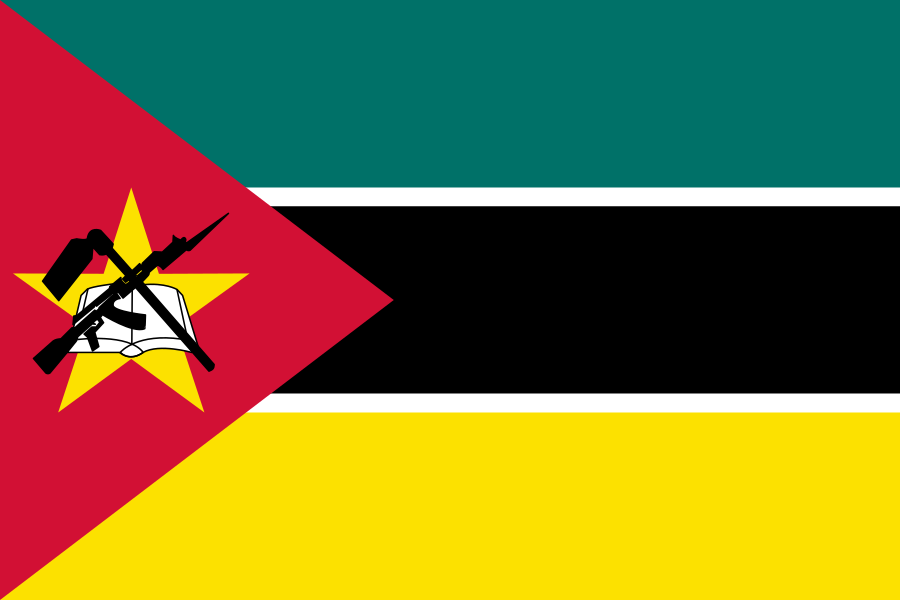
🇲🇿 Country Profile: Mozambique
🌍 Introduction
Mozambique is a southeastern African country known for its long Indian Ocean coastline, river systems, and diverse ecosystems. Stretching along the coast of the Indian Ocean, it connects coastal plains with inland plateaus and highlands. Its geography includes beaches, deltas, savannas, and mountain areas in the west.
📌 General Overview
Official Name: Republic of Mozambique.
Capital: Maputo.
Official Language: Portuguese.
Government Type: Presidential republic.
Currency: Mozambican Metical (MZN).
Time Zone: Central Africa Time (CAT).
🗺️ Country-Specific Maps
Political maps show provincial boundaries, major cities, and international borders. Administrative maps present provinces and districts. Physical maps highlight coastal plains, inland plateaus, mountain zones, and major river valleys. Hydrology maps show key rivers and delta systems. Transportation maps display highways, rail corridors, ports, and airports. Thematic maps often include land cover, climate zones, and resource areas.
👥 Demography & Population
Mozambique has an estimated population of over 33 million people. Major cities include Maputo, Beira, and Nampula. Population distribution is higher along the coast and in fertile river valleys. Many communities live in rural agricultural areas. Urban growth is increasing around major cities.
🏛️ Administrative Divisions
Mozambique is divided into provinces, which are further subdivided into districts and administrative posts. Provincial capitals serve as administrative and service centers. Local administrations manage community-level governance.
💰 Economy & Industries
The economy is supported by agriculture, mining, energy, and services. Key agricultural products include cassava, maize, and cash crops. Natural gas and mineral resources are important sectors. Fisheries and port services contribute to the economy.
🌟 Places of Interest & Tourism
Notable places include island archipelagos, marine parks, coastal beaches, and wildlife reserves. The Bazaruto Archipelago and coastal reefs are major attractions. Beach and nature tourism are key themes.
🚆 Transportation & Connectivity
Transportation infrastructure includes highways, railways, seaports, and airports. Major ports serve regional trade corridors. Rail and road routes connect inland neighboring countries to the coast. Air travel links major cities.
🌦️ Climate & Geography
Mozambique has a tropical to subtropical climate with wet and dry seasons. Coastal areas are humid, while inland areas vary by elevation. Cyclones can affect coastal regions seasonally. Terrain ranges from low coastal plains to western highlands.
📜 History & Culture
Mozambique has a history shaped by coastal trade networks and inland societies. Cultural traditions include music, dance, crafts, and oral heritage. Coastal and inland cultures show regional variation.
📌 Quick Facts & Trivia
Mozambique has one of Africa’s longest Indian Ocean coastlines. Several major rivers flow to the ocean through its territory. Portuguese is the official language. Marine biodiversity is high along the coast. Port corridors are important for regional trade.