
Rwanda
National Flag of Rwanda
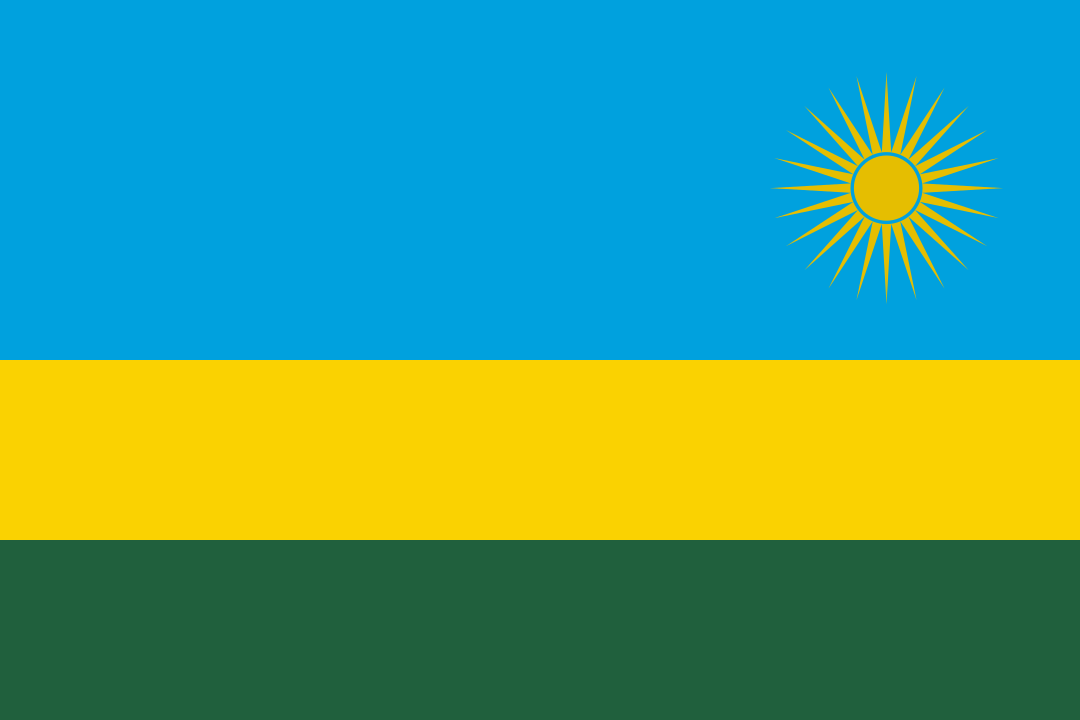
🇷🇼 Country Profile: Rwanda
🌍 Introduction
Rwanda is a landlocked East African country known for its green hills, highland landscapes, and protected mountain ecosystems. Located in the African Great Lakes region, it is often called the “land of a thousand hills” because of its rolling terrain. Its geography includes upland plateaus, volcanic mountains, lakes, and fertile valleys.
📌 General Overview
Official Name: Republic of Rwanda.
Capital: Kigali.
Official Languages: Kinyarwanda, English, and French.
Government Type: Presidential republic.
Currency: Rwandan Franc (RWF).
Time Zone: Central Africa Time (CAT).
🗺️ Country-Specific Maps
Political maps show provincial boundaries, major towns, and international borders. Administrative maps present provinces, districts, and sectors. Physical maps highlight highland terrain, volcanic ranges, and lake regions. Hydrology maps show river systems and Lake Kivu. Transportation maps display highways and border corridors. Thematic maps often include elevation, land use, and conservation areas.
👥 Demography & Population
Rwanda has an estimated population of over 13 million people. Major urban centers include Kigali and secondary towns across the provinces. Population density is high compared to most African countries. Many people live in rural hillside farming communities. Settlement patterns closely follow arable land.
🏛️ Administrative Divisions
Rwanda is divided into provinces and a capital city region, which are further subdivided into districts, sectors, and cells. District centers act as administrative and service hubs. Local administrations manage community-level governance.
💰 Economy & Industries
The economy is supported by agriculture, services, tourism, and light manufacturing. Key agricultural products include coffee and tea. Service sectors and technology-related activities are growing. Tourism focused on nature and conservation is important.
🌟 Places of Interest & Tourism
Notable places include volcanic mountain parks, forest reserves, and lake shores. Volcanoes National Park and mountain ecosystems are major attractions. Nature and conservation tourism are central themes.
🚆 Transportation & Connectivity
Transportation is mainly road-based, with national highways linking cities and border points. Airports support domestic and regional air travel. There is no extensive national rail system. Road networks are the main transport corridors.
🌦️ Climate & Geography
Rwanda has a temperate tropical highland climate with moderate temperatures due to elevation. Rainfall is seasonal with two main wet periods. The terrain is mostly hilly and mountainous. Soils are generally fertile but erosion-sensitive on steep slopes.
📜 History & Culture
Rwanda has a long history of centralized kingdoms and strong community traditions. Cultural life includes dance, crafts, music, and ceremonial practices. Community-based social organization remains important.
📌 Quick Facts & Trivia
Rwanda is one of Africa’s most densely populated countries. It is known as the land of a thousand hills. Much of the country lies at high elevation. Coffee and tea are key export crops. Mountain conservation areas are internationally known.
Downloads
Download JSON file Download KML file Download Shapefile Download FlagTopics covered