
Albania
National Flag of Albania
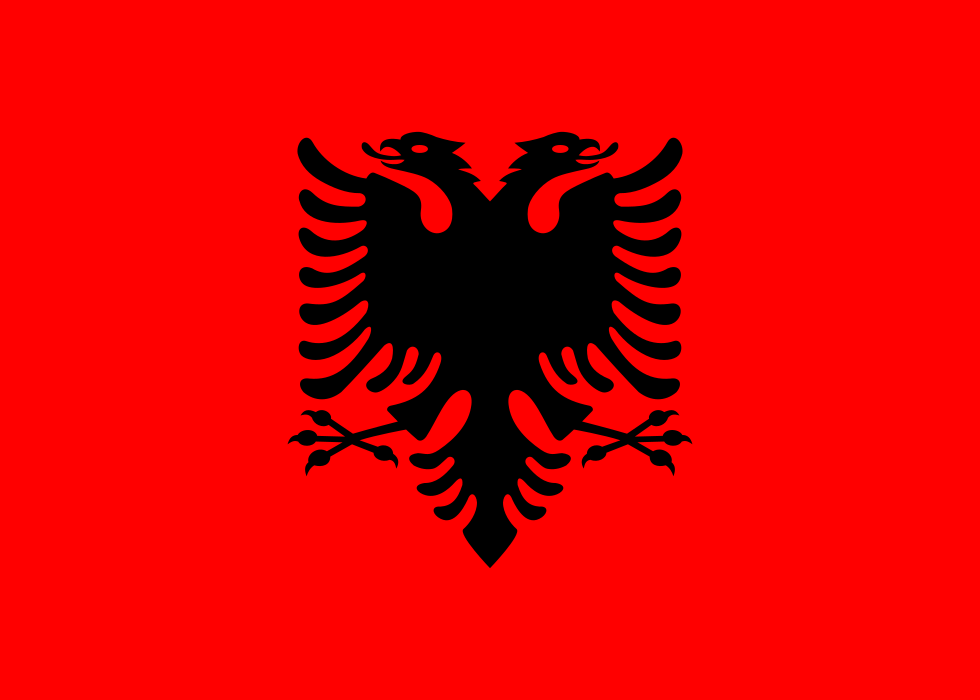
🇦🇱 Albania: Country Profile
📌 Introduction
Albania, located in the western Balkans, is a country of stunning natural beauty with rugged mountains, picturesque coastlines, and a deep historical heritage. Known for its ancient ruins, vibrant culture, and Mediterranean charm, Albania offers a unique experience for travelers. From the ancient city of Butrint to the stunning beaches along the Ionian Sea, Albania is a hidden gem waiting to be discovered.
🌍 General Overview
- 📍 Official Name: Republic of Albania
- 🏙️ Capital: Tirana
- 🗣️ Official Language: Albanian
- 🏛️ Government Type: Parliamentary Republic
- 💰 Currency: Albanian lek (ALL)
- ⏳ Time Zone: Central European Time (CET)
- 🎉 Independence: Albania declared its independence from the Ottoman Empire on November 28, 1912.
🗺️ Country-Specific Maps
Explore Albania with various maps:
- 🗺️ Political Map: Showing the capital Tirana and other key cities like Shkodra, Vlorë, and Elbasan.
- 🏞️ Topographic Map: Highlighting the country’s mountain ranges, rivers, and coastline, including the Ionian Sea.
- 🌊 Tourist Map: Featuring Albania’s most iconic spots, including Butrint, Dajti Mountain National Park, Theth, and Gjirokastër.
👥 Demography & Population
- 👨👩👧👦 Population: ~2.8 million (2024)
- 🏙️ Major Cities: Tirana, Durrës, Shkodra, Vlorë, Elbasan
- 🌆 Urbanization Rate: ~58%
- ⏳ Life Expectancy: ~78 years
- 🏳️ Ethnic Groups: Predominantly Albanian, with minorities including Serbs, Montenegrins, and Greeks.
🏛️ Administrative Divisions
Albania is divided into 12 administrative regions. Notable regions include:
- Tirana (Capital and largest city)
- Durrës (Major port and second-largest city)
- Shkodra (Cultural and historic center)
- Vlorë (Tourism hotspot on the Ionian coast)
- Gjirokastër (UNESCO World Heritage Site known for Ottoman architecture)
💰 Economy & Industries
- 📈 GDP: ~$17.2 billion (2024)
- 🏭 Key Sectors:
- Agriculture: Known for tobacco, fruits, vegetables, and olive oil 🌾
- Manufacturing: Focused on cement, tobacco, textiles, and food processing 🏭
- Energy: Albania has significant hydroelectric power potential 💡
- Tourism: The Ionian and Adriatic coasts, Albanian Riviera, and ancient Butrint attract many visitors 🏖️
- Mining: Albania has deposits of chromium, bauxite, and oil 🏔️
🌟 Places of Interest & Tourism
- 🏛️ Butrint: A UNESCO World Heritage Site, this ancient Greek and Roman city is one of Albania’s most important archaeological sites 🏺
- 🏞️ Dajti Mountain National Park: A stunning nature reserve offering hiking, panoramic views, and a cable car ride 🚠
- 🏖️ Albanian Riviera: A pristine stretch of coastline with beautiful beaches, crystal-clear waters, and charming villages 🌊
- ⛰️ Theth National Park: A remote and scenic area known for its rugged mountains, waterfalls, and traditional houses 🏞️
- 🏰 Gjirokastër: A UNESCO World Heritage Site, Gjirokastër is famous for its well-preserved Ottoman architecture and castle 🏰
- 🕌 Krujë Castle: Home to Skanderbeg, Albania’s national hero, and an important historical site 🏰
🚆 Transportation & Connectivity
- ✈️ Major Airports: Tirana International Airport serves both domestic and international flights ✈️
- 🚆 Railways: Rail services are available connecting Albania to neighboring countries like Kosovo and Montenegro 🚂
- 🚗 Public Transport: Bus, minibus, and taxi services are available throughout the country 🚌
- 🚢 Ports & Marinas: Albania has several ports along the Ionian and Adriatic Seas, including Durrës, a major shipping port 🛳️
🌦️ Climate & Geography
- ☀️ Climate: Albania has a Mediterranean climate on the coast, with hot, dry summers and mild, wet winters, while the interior has more continental weather.
- 🏞️ Geography:
- Mountains: The Albanian Alps, Cahmir Mountains, and Pindus Mountains dominate the country’s interior 🏔️
- Rivers: The Vjosa River, Drin River, and Lëngaj River are some of the country’s major water sources 🌊
- Coastline: The Ionian Sea and Adriatic Sea make up Albania’s beautiful and pristine coastline 🌊
📜 History & Culture
- ⚔️ Early History: Albania’s history dates back to ancient Illyrian civilizations, followed by Greek, Roman, Byzantine, and Ottoman influences.
- 🏛️ Independence: Albania declared its independence from the Ottoman Empire in 1912.
- 🎶 Culture: Albania has a rich tradition in folk music, dance, and literature. Polyphonic music is recognized by UNESCO as an intangible cultural heritage.
- 🍽️ Cuisine: Albanian cuisine is Mediterranean, featuring fresh seafood, grilled meats, olives, and cheese. Famous dishes include börek, tavë kosi, and fërgesë.
- 🎉 Festivals: Albania celebrates Summer Day (March 14), Independence Day (November 28), and various cultural festivals such as the Tirana International Film Festival 🎬.
🔍 Quick Facts & Trivia
- 🛡️ National Motto: “Unity makes strength”
- 🦅 National Animal: Golden Eagle
- 🌸 National Flower: Rose
- 🎲 Famous Landmark: Butrint Archaeological Site
- 🌍 UNESCO World Heritage Sites: Butrint, Gjirokastër, Berat, and the Albanian Riviera
Downloads
Download JSON file Download KML file Download Shapefile Download FlagTopics covered