
Algeria
National Flag of Algeria
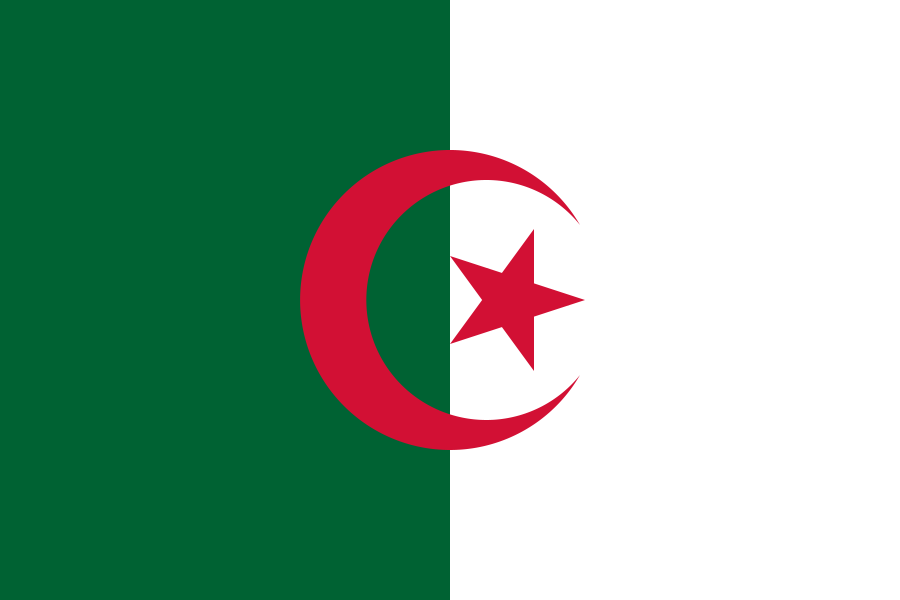
🇩🇿 Country Profile: ALGERIA
🌍 Introduction
Algeria is a North African country known for its vast desert landscapes, Mediterranean coastline, and long historical heritage. Located between the Mediterranean Sea and the Sahara Desert, it is the largest country in Africa by land area. Its geography ranges from fertile coastal plains and mountain ranges in the north to extensive desert plateaus and dune fields in the south.
📌 General Overview
Official Name: People’s Democratic Republic of Algeria.
Capital: Algiers.
Official Language: Arabic (with Tamazight also recognized).
Government Type: Presidential republic.
Currency: Algerian Dinar (DZD).
Time Zone: Central European Time (CET).
🗺️ Country-Specific Maps
Political maps show provincial (wilaya) boundaries, major cities, and international borders. Administrative maps present provinces and districts. Physical maps highlight the Tell Atlas and Saharan Atlas mountains, high plateaus, and desert regions. Hydrology maps show seasonal rivers and oasis zones. Transportation maps display highways, rail lines, ports, and pipelines. Thematic maps often include land cover, climate zones, and energy resources.
👥 Demography & Population
Algeria has an estimated population of over 45 million people. Major cities include Algiers, Oran, Constantine, and Annaba. Most of the population lives in the northern coastal and highland zones. Southern desert regions are sparsely populated with oasis settlements. Urbanization is high along the Mediterranean corridor.
🏛️ Administrative Divisions
Algeria is divided into provinces called wilayas, which are further subdivided into districts and communes. Provincial capitals serve as administrative and service centers. Local communes manage community-level services.
💰 Economy & Industries
The economy is strongly supported by oil and natural gas production and exports. Other sectors include petrochemicals, mining, agriculture, and services. Key agricultural products include grains, olives, and dates. Energy infrastructure and export terminals are major economic assets.
🌟 Places of Interest & Tourism
Notable places include historic Casbah districts, Roman-era archaeological sites, Sahara desert landscapes, and mountain national parks. Popular attractions include desert oases, rock art areas, and Mediterranean coastal cities. Cultural and desert tourism are key highlights.
🚆 Transportation & Connectivity
Transportation infrastructure includes highways, rail networks, seaports, and international airports. Road and rail corridors connect major northern cities. Ports along the Mediterranean handle most trade. Long-distance routes link northern regions with Saharan zones.
🌦️ Climate & Geography
Algeria has a Mediterranean climate along the coast with hot, dry summers and mild winters, while the interior and southern regions have arid desert climates. Rainfall decreases sharply from north to south. The Sahara covers most of the country’s land area. Elevation and latitude create strong climate contrasts.
📜 History & Culture
Algeria has a long history shaped by ancient Berber cultures, Mediterranean civilizations, and later Islamic and Ottoman influences. Cultural traditions include architecture, crafts, music, and literature. Historic cities and archaeological sites reflect layered historical periods.
📌 Quick Facts & Trivia
Algeria is the largest country in Africa by area. Most of its territory lies within the Sahara Desert. It has significant natural gas reserves. Many ancient Roman ruins are found in the north. Oasis agriculture is important in desert regions.
Downloads
Download JSON file Download KML file Download Shapefile Download FlagTopics covered