
Antigua and Barbuda
National Flag of Antigua and Barbuda
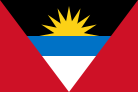
🇦🇬 Country Profile: Antigua and Barbuda
🌍 Introduction
Antigua and Barbuda is a Caribbean island country known for its white-sand beaches, coral reefs, and maritime heritage. Located in the eastern Caribbean Sea, it consists mainly of the islands of Antigua and Barbuda along with several smaller islets. Its geography features low-lying limestone terrain, coastal lagoons, and reef-lined shores, making it a prominent small-island environment.
📌 General Overview
Official Name: Antigua and Barbuda.
Capital: St. John’s.
Official Language: English.
Government Type: Parliamentary monarchy.
Currency: East Caribbean Dollar (XCD).
Time Zone: Atlantic Standard Time (AST).
🗺️ Country-Specific Maps
Political maps show island boundaries, parishes, and main towns. Administrative maps present parish divisions and local areas. Physical maps highlight coastal plains, low hills, lagoons, and reef systems. Marine maps show surrounding reefs and navigation zones. Transportation maps display roads, ports, and airport facilities. Thematic maps often include tourism zones, land use, and coastal features.
👥 Demography & Population
Antigua and Barbuda has an estimated population of about 100,000 people. Most residents live on the island of Antigua, especially around St. John’s and nearby urban areas. Barbuda has a much smaller population and more dispersed settlement pattern. Population distribution is closely tied to coastal access and services.
🏛️ Administrative Divisions
The country is divided into parishes on Antigua and a separate administrative division for Barbuda. Local councils and authorities manage community services and planning. Parish centers act as local administrative hubs.
💰 Economy & Industries
The economy is driven mainly by tourism, hospitality, and related services. Other sectors include construction, transport, and small-scale agriculture and fisheries. Cruise tourism and resort development are major income sources. Financial and business services also contribute.
🌟 Places of Interest & Tourism
Notable places include numerous beaches, historic naval dockyards, coral reef areas, and coastal viewpoints. Heritage harbor sites and restored colonial-era structures are major attractions. Beach and marine tourism are central to visitor activity.
🚆 Transportation & Connectivity
Transportation is primarily road-based on the main islands, with networks connecting towns, resorts, and ports. An international airport serves Antigua. Seaports and cruise terminals are important for tourism and trade. Ferry and boat services connect smaller islands.
🌦️ Climate & Geography
Antigua and Barbuda has a tropical maritime climate with warm temperatures year-round and a wetter and drier season. Rainfall is moderate and can vary by season. Terrain is mostly low-lying with some gentle hills. Coastal and marine environments dominate the geography.
📜 History & Culture
The country has a history shaped by Indigenous settlement, colonial-era plantation systems, and maritime trade. Cultural traditions include music, festivals, crafts, and Caribbean cuisine. Historic dockyards and town centers reflect colonial and naval heritage.
📌 Quick Facts & Trivia
Antigua is often noted for having many beaches around its coastline. Barbuda is known for wide, less-developed natural beaches. Sailing and boating are popular activities. Coral reefs surround much of the coastline. Tourism is the leading economic sector.