
Argentina
National Flag of Argentina
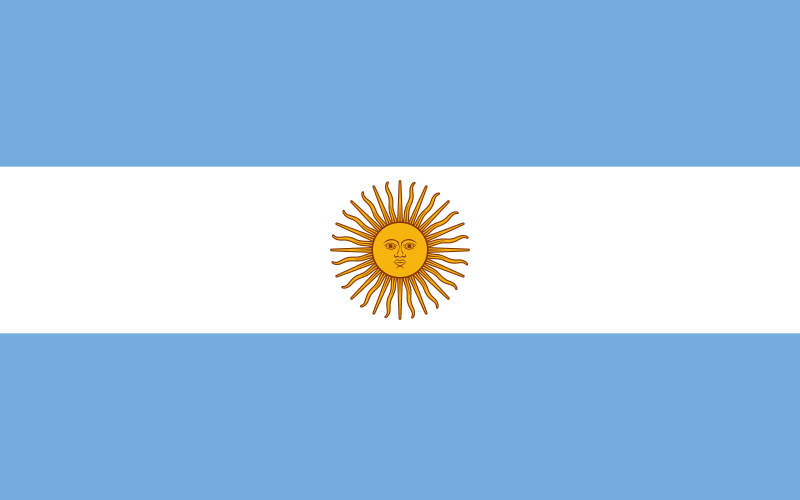
🇦🇷 Argentina: Country Profile
📌 Introduction
Argentina, the second-largest country in South America, is known for its stunning landscapes, from the Andes mountains to the Pampas grasslands and Patagonian glaciers. It is rich in cultural diversity, offering vibrant cities, historical landmarks, and world-renowned cuisine.
🌍 General Overview
- Official Name: Argentine Republic (República Argentina)
- Capital: Buenos Aires 🏙️
- Official Language: Spanish 🇦🇷
- Currency: Argentine Peso (ARS) 💰
- Government: Federal republic with a President as both head of state and head of government 🏛️
- Area: 2,780,400 km² 🌍
- Population: ~45 million (2025 est.) 👥
- Time Zone: UTC-3 (Argentina Standard Time – ART) ⏰
🗺️ Country-Specific Maps
Argentina is located in the southern part of South America, bordered by Chile to the west, Brazil and Paraguay to the north, Uruguay and the South Atlantic Ocean to the east, and the Drake Passage to the south.
👥 Demography & Population
- Ethnic Groups:
- Predominantly European descent (mainly Italian and Spanish).
- Indigenous populations (Mapuche, Quechua) and smaller communities from the Middle East.
- Religions:
- Roman Catholic (around 91%) ✝️
- Protestant, Jewish, and other religious groups.
- Urban Population: About 92% of the population resides in urban areas, with Buenos Aires being the largest city.
🏙️ Administrative Divisions
Argentina is divided into 23 provinces and the Autonomous City of Buenos Aires. The provinces are:
- Buenos Aires
- Catamarca
- Chaco
- Chubut
- Córdoba
- Corrientes
- Entre Ríos
- Formosa
- Jujuy
- La Pampa
- La Rioja
- Mendoza
- Misiones
- Neuquén
- Río Negro
- Salta
- San Juan
- San Luis
- Santa Cruz
- Santa Fe
- Santiago del Estero
- Tierra del Fuego
- Tucumán
💰 Economy & Industries
- Major Sectors: Agriculture 🌾, Manufacturing 🏭, Services 💼
- Top Exports: Soybeans, petroleum, vehicles, corn, and wheat.
- GDP: ~$630 billion (2025 est.)
- Major Trade Partners: Brazil 🇧🇷, China 🇨🇳, the United States 🇺🇸, and Chile 🇨🇱
🌄 Places of Interest & Tourism
- Buenos Aires: A bustling metropolis known for its European-style architecture, tango music, and vibrant nightlife 🏙️
- Iguazú Falls: One of the largest and most stunning waterfall systems in the world 🌊
- Patagonia: Famous for its majestic glaciers, mountains, and wildlife 🏔️
- Mendoza: Argentina’s wine capital, offering world-class vineyards 🍷
- Ushuaia: The southernmost city in the world, located at the edge of Antarctica 🌍
🚆 Transportation & Connectivity
- Major Airports: Ministro Pistarini International Airport (Buenos Aires), Córdoba International Airport ✈️
- Rail & Road: Argentina has a well-developed road network connecting major cities and towns 🚉🚗
- Public Transport: Buenos Aires boasts an extensive metro system, as well as buses 🚌
- Ports: Buenos Aires, Rosario, and Bahía Blanca are the major ports 🚢
🌦️ Climate & Geography
- Climate Type: Argentina has diverse climates, including subtropical in the north, temperate in the central region, and polar in the south. 🌡️
- Seasons:
- Summer (Dec–Feb): Hot and humid in the north, cooler in the south 🌞
- Winter (Jun–Aug): Cold in the southern regions, mild in the north ❄️
- Highest Point: Aconcagua (6,961 m), the highest mountain in both the Western and Southern Hemispheres ⛰️
- Rivers: The Paraná and Uruguay rivers are among the largest in the country 🌊
🏛️ History & Culture
- Early History: The region was originally inhabited by indigenous groups like the Mapuche and Quechua before being colonized by Spain in the 16th century.
- Modern Argentina: Gained independence from Spain in 1816 and became a republic. The country has faced political and economic challenges, but it remains one of the largest economies in Latin America.
- Cultural Influence: Argentina is known for its rich contributions to literature, arts, and music. Tango music and dance originated here, and Argentina’s literary tradition includes celebrated writers like Jorge Luis Borges.
- Famous Festivals:
- Carnival of Gualeguaychú 🎉
- Feria del Libro (Book Fair) 📚
- Fiesta Nacional de la Vendimia (Harvest Festival) 🍇
📊 Quick Facts & Trivia
- Argentina is the birthplace of tango, one of the most famous dances in the world. 💃
- The country is home to the world’s southernmost city, Ushuaia, located at the edge of Antarctica. ❄️
- Argentina has some of the best beef in the world, with its beef industry being one of the largest globally. 🥩
- The Aconcagua Mountain is a popular climbing destination, attracting mountaineers from around the globe. 🏔️