
Bhutan
National Flag of Bhutan
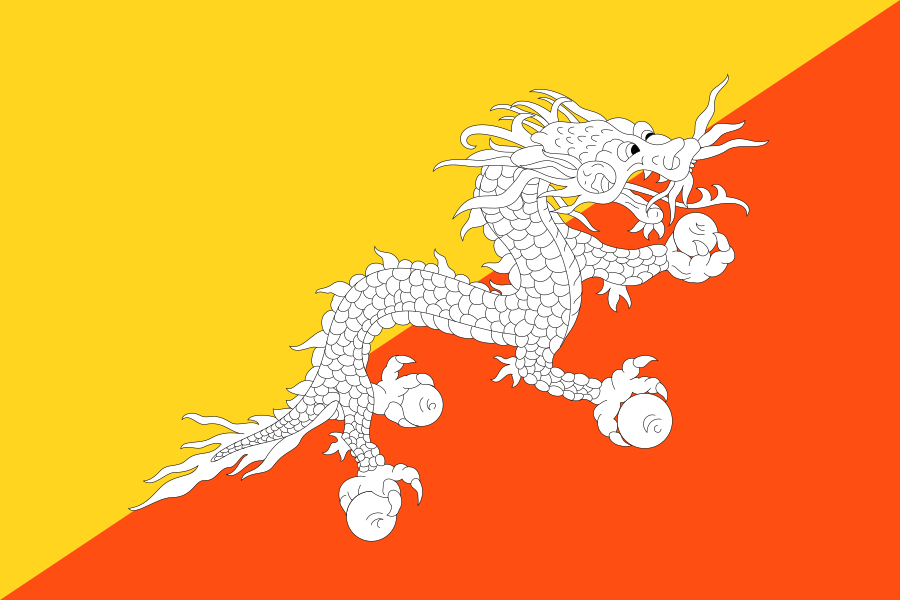
🇧🇹 Country Profile: Bhutan
🌍 Introduction
Bhutan is a landlocked Himalayan country in South Asia, known for its mountain landscapes, forest cover, and strong cultural traditions. Located between India and China, it is recognized for its focus on environmental conservation and cultural preservation. Much of the country is mountainous, with deep valleys and fast-flowing rivers shaping settlement and transport patterns.
📌 General Overview
Official Name: Kingdom of Bhutan.
Capital: Thimphu.
Official Language: Dzongkha.
Government Type: Constitutional monarchy.
Currency: Bhutanese Ngultrum (BTN).
Time Zone: Bhutan Time (BTT).
🗺️ Country-Specific Maps
Political maps show districts, major towns, and international borders. Administrative maps present dzongkhag (district) boundaries and regional centers. Physical and topographic maps highlight the Himalayan ranges, high passes, and river valleys. Transportation maps display mountain highways and connecting corridors. Thematic maps often show forest cover, protected areas, and elevation zones.
👥 Demography & Population
Bhutan has an estimated population of about 800,000 people. Major urban centers include Thimphu, Phuentsholing, and Paro. A large share of the population lives in rural and valley settlements. Population distribution is influenced by elevation, climate, and road access. The population includes several ethnic and linguistic communities.
🏛️ Administrative Divisions
Bhutan is divided into 20 districts known as dzongkhags. These are further subdivided into sub-districts and local administrative blocks. District headquarters function as administrative and service centers for surrounding regions.
💰 Economy & Industries
The economy is based on hydropower, agriculture, forestry, and tourism. Hydroelectric energy exports are a major source of national revenue. Agriculture includes rice, maize, and livestock farming. Controlled tourism, handicrafts, and small industries also contribute to the economy.
🌟 Places of Interest & Tourism
Notable places include Paro Taktsang (Tiger’s Nest Monastery), Punakha Dzong, Thimphu Valley, Phobjikha Valley, and several mountain trekking routes. Monasteries, fortresses, and scenic valleys are central tourism attractions.
🚆 Transportation & Connectivity
Transportation relies mainly on road networks through mountain terrain. Highways connect major valleys and border towns. The main international airport is located in Paro. There are no domestic rail networks. Mountain passes and river valleys strongly influence route alignment.
🌦️ Climate & Geography
Bhutan’s climate ranges from subtropical in the southern plains to alpine conditions in the high Himalayas. Summers are influenced by the monsoon, while winters are cold at higher elevations. The terrain is dominated by mountains, forests, and river systems flowing southward.
📜 History & Culture
Bhutan has a long cultural history rooted in Himalayan Buddhist traditions. Monastic institutions, festivals, and fortress-monasteries called dzongs are central to cultural life. Traditional architecture, dress, and arts are actively preserved. Cultural identity and environmental protection are closely linked in national policy.
📌 Quick Facts & Trivia
Bhutan measures development using Gross National Happiness alongside economic indicators. Forests cover a large majority of the country’s land area. The national dress is commonly worn in public institutions. Hydropower is the leading export sector. Many festivals are based on Buddhist traditions and local heritage.
Downloads
Download JSON file Download KML file Download Shapefile Download FlagTopics covered