
Brunei
National Flag of Brunei
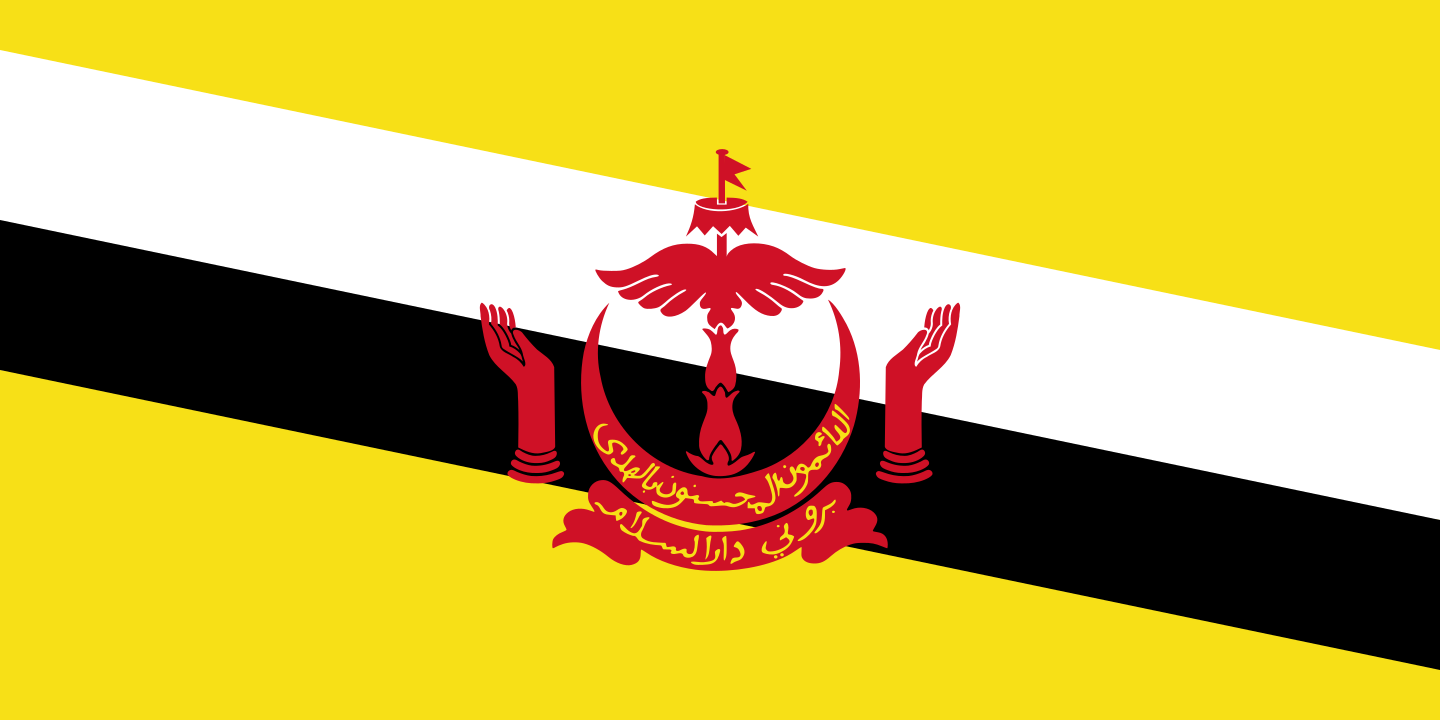
🇧🇳 Country Profile: Brunei
🌍 Introduction
Brunei is a small, wealthy country located on the northern coast of the island of Borneo in Southeast Asia, known for its oil and gas resources, tropical rainforests, and Islamic heritage. Surrounded mostly by Malaysia and bordered by the South China Sea, it has a strong maritime and trade history. Its landscape combines coastal plains, river systems, and dense forest reserves.
📌 General Overview
Official Name: Nation of Brunei, the Abode of Peace.
Capital: Bandar Seri Begawan.
Official Language: Malay.
Government Type: Absolute monarchy.
Currency: Brunei Dollar (BND).
Time Zone: Brunei Time (BNT).
🗺️ Country-Specific Maps
Political maps show national boundaries, districts, and major towns. Administrative maps present district divisions and subdistrict areas. Physical maps highlight coastal lowlands, forested interiors, and river networks. Land cover maps emphasize rainforest distribution and protected zones. Transportation maps show highways, ports, and airport facilities.
👥 Demography & Population
Brunei has an estimated population of about half a million people. Major population centers include Bandar Seri Begawan, Kuala Belait, and Seria. Most residents live in urban and suburban areas along the coast. The population includes Malay, Chinese, and other communities. Settlement patterns are closely tied to coastal and riverine zones.
🏛️ Administrative Divisions
Brunei is divided into four districts. Each district is further subdivided into subdistricts and local administrative units. District towns serve as regional administrative and service centers.
💰 Economy & Industries
The economy is heavily based on oil and natural gas production. Energy exports form the largest share of government revenue. Other sectors include petrochemicals, services, finance, and halal food industries. The government plays a major role in economic planning and infrastructure development.
🌟 Places of Interest & Tourism
Notable places include the Sultan Omar Ali Saifuddien Mosque, Kampong Ayer water village, Ulu Temburong National Park, and royal museums in the capital. Rainforest reserves and river landscapes are key eco-tourism attractions.
🚆 Transportation & Connectivity
Transportation is mainly road-based, with highways linking major towns and oil-producing areas. There is no national railway system. The main international airport serves the capital region. Ports and marine routes support trade and energy exports. River transport remains locally important in some areas.
🌦️ Climate & Geography
Brunei has a tropical equatorial climate with high humidity, warm temperatures, and frequent rainfall throughout the year. The terrain includes coastal plains and hilly forested interiors. Rivers and mangrove zones are important geographic features.
📜 History & Culture
Brunei has a long history as a regional sultanate and maritime trading power. Its culture is strongly influenced by Malay and Islamic traditions. Ceremonial architecture, mosques, and royal institutions play a central cultural role. Traditional arts, crafts, and customs are actively preserved.
📌 Quick Facts & Trivia
Brunei is one of the smallest countries in Asia by land area. It has significant rainforest conservation coverage. Oil and gas dominate exports. Kampong Ayer is one of the world’s largest traditional water villages. The monarchy plays a central role in governance and national identity.
Downloads
Download JSON file Download KML file Download Shapefile Download FlagTopics covered