
Burundi
National Flag of Burundi
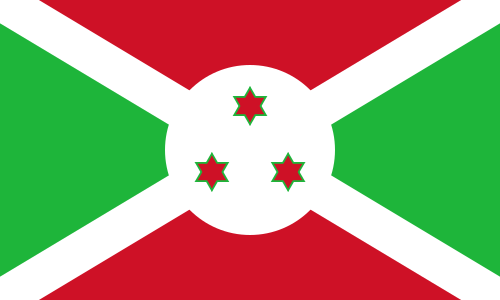
🇧🇮 Country Profile: Burundi
🌍 Introduction
Burundi is a landlocked East African country known for its highland landscapes, inland lakes, and strong agricultural traditions. Located in the African Great Lakes region, it lies between Rwanda, Tanzania, and the Democratic Republic of the Congo. Its geography is dominated by plateaus, hills, and valleys, with Lake Tanganyika forming much of its western border.
📌 General Overview
Official Name: Republic of Burundi.
Capital: Gitega.
Official Languages: Kirundi, French, and English.
Government Type: Presidential republic.
Currency: Burundian Franc (BIF).
Time Zone: Central Africa Time (CAT).
🗺️ Country-Specific Maps
Political maps show provincial boundaries, major towns, and international borders. Administrative maps present provinces and communes. Physical maps highlight highland plateaus, hill systems, and lake shore zones. Hydrology maps show river networks and the Lake Tanganyika basin. Transportation maps display road corridors and border crossings. Thematic maps often include land use, elevation, and agriculture zones.
👥 Demography & Population
Burundi has an estimated population of over 12 million people. Major cities include Gitega and Bujumbura. Population density is high, with many people living in rural farming communities. Settlement patterns are spread across hills and cultivated slopes. The population is largely rural.
🏛️ Administrative Divisions
Burundi is divided into provinces, which are further subdivided into communes and local zones. Provincial capitals serve as administrative and service centers. Communal authorities manage local governance and services.
💰 Economy & Industries
The economy is supported mainly by agriculture, small trade, and services. Key agricultural products include coffee, tea, maize, beans, and bananas. Small-scale farming is the primary livelihood for much of the population. Agricultural exports such as coffee and tea are important sources of foreign income.
🌟 Places of Interest & Tourism
Notable places include Lake Tanganyika shores, hill landscapes, cultural drum performance centers, and nature reserves. Scenic viewpoints and lakeside areas are key attractions. Cultural heritage activities are important visitor interests.
🚆 Transportation & Connectivity
Transportation is primarily road-based, with networks linking cities, towns, and border crossings. There is no extensive national rail system. Lake transport operates along Lake Tanganyika. Airports serve the main urban areas.
🌦️ Climate & Geography
Burundi has a tropical highland climate with moderate temperatures due to elevation. There are distinct wet and dry seasons. Rainfall supports intensive agriculture in many regions. The terrain is largely hilly and elevated.
📜 History & Culture
Burundi has a long history of kingdom-based governance and strong community traditions. Cultural heritage includes drumming, dance, crafts, and oral traditions. Ceremonial drum performances are internationally recognized cultural symbols.
📌 Quick Facts & Trivia
Burundi is part of the African Great Lakes region. Much of the country lies at high elevation. Coffee and tea are major export crops. Traditional drum culture is nationally significant. Most people live in rural hillside communities.
Downloads
Download JSON file Download KML file Download Shapefile Download FlagTopics covered