
Comoros
National Flag of Comoros
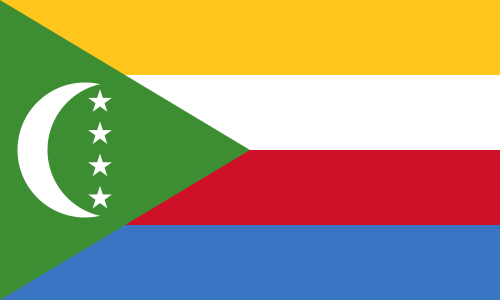
🇰🇲 Country Profile: Comoros
🌍 Introduction
Comoros is an island country in the Indian Ocean known for its volcanic islands, tropical vegetation, and maritime culture. Located between the east coast of Africa and Madagascar, it consists of a small archipelago of major islands and smaller islets. Its geography features volcanic mountains, coastal plains, and reef-lined shores.
📌 General Overview
Official Name: Union of the Comoros.
Capital: Moroni.
Official Languages: Comorian, French, and Arabic.
Government Type: Federal presidential republic.
Currency: Comorian Franc (KMF).
Time Zone: East Africa Time (EAT).
🗺️ Country-Specific Maps
Political maps show the island members and internal administrative divisions. Administrative maps present island-level regions and communes. Physical maps highlight volcanic peaks, lava fields, and coastal lowlands. Marine maps show island spacing, reefs, and territorial waters. Transportation maps display ports, airports, and road networks. Thematic maps often include land cover, agriculture areas, and hazard zones.
👥 Demography & Population
Comoros has an estimated population of about 900,000 people. Major population centers include Moroni and other coastal towns. Most residents live in coastal communities around the islands. Settlement patterns are shaped by terrain, agriculture, and port access. Rural villages are common inland.
🏛️ Administrative Divisions
Comoros is organized as a union of islands, each with its own local administration. The main islands are divided into regions and communes. Island and regional centers function as administrative hubs.
💰 Economy & Industries
The economy is supported by agriculture, fisheries, services, and remittances. Key agricultural products include vanilla, cloves, and ylang-ylang. Fishing and small-scale farming are important livelihoods. Trade and port activities support local economies.
🌟 Places of Interest & Tourism
Notable places include volcanic Mount Karthala, tropical beaches, coral reefs, and traditional towns. Marine areas and island landscapes are major attractions. Nature and beach tourism are key visitor interests.
🚆 Transportation & Connectivity
Transportation relies on coastal roads, seaports, and airports on the main islands. Inter-island travel is mainly by boat and air. Ports support fishing and cargo movement. There is no rail system.
🌦️ Climate & Geography
Comoros has a tropical maritime climate with warm temperatures and seasonal rainfall. Higher elevations receive more rain than coastal zones. The islands are volcanic in origin with rugged interiors. Cyclonic storms can occur seasonally.
📜 History & Culture
Comoros has a history shaped by Indian Ocean trade networks and island settlement. Cultural traditions include music, crafts, and festivals influenced by African, Arab, and island heritage. Maritime culture is central to daily life.
📌 Quick Facts & Trivia
Comoros is a volcanic island archipelago. It is one of the world’s notable producers of ylang-ylang essence. Vanilla and cloves are major export crops. Most settlements are coastal. Inter-island sea travel is essential.
Downloads
Download JSON file Download KML file Download Shapefile Download FlagTopics covered