
Costa Rica
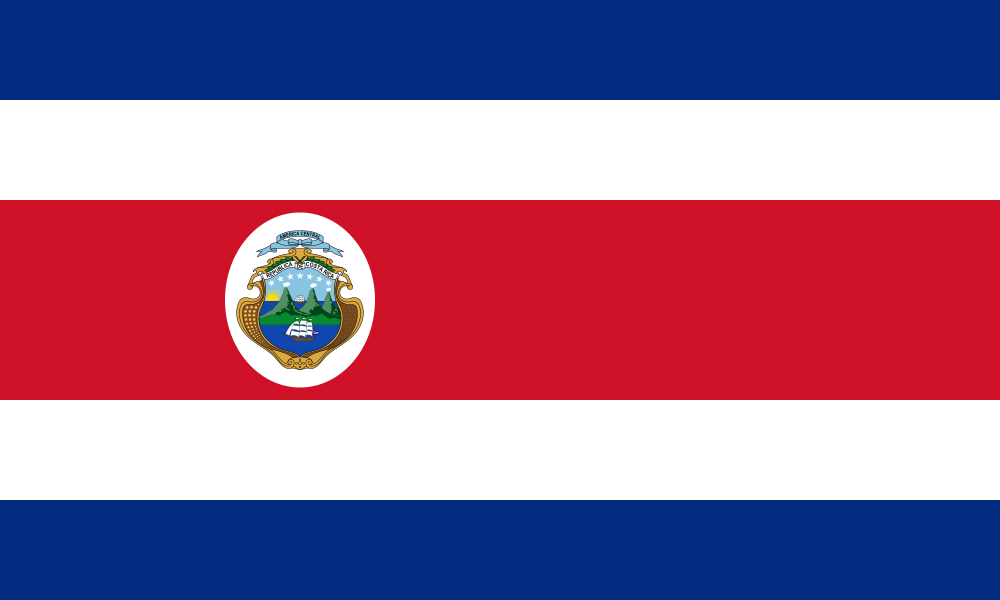
National Flag of Costa Rica
🇨🇷 Country Profile: Costa Rica
🌍 Introduction
Costa Rica is a Central American country known for its rich biodiversity, tropical forests, and environmental conservation policies. Located between the Caribbean Sea and the Pacific Ocean, it serves as a natural bridge between North and South America. Its geography includes mountain ranges, volcanoes, rainforests, and coastal plains, creating highly diverse ecosystems.
📌 General Overview
Official Name: Republic of Costa Rica.
Capital: San José.
Official Language: Spanish.
Government Type: Presidential republic.
Currency: Costa Rican Colón (CRC).
Time Zone: Central Standard Time (CST).
🗺️ Country-Specific Maps
Political maps show provincial boundaries, major cities, and international borders. Administrative maps present provinces and cantons. Physical maps highlight mountain chains, volcanic zones, forests, and coastal lowlands. Hydrology maps show river basins and watershed systems. Transportation maps display highways, ports, and airports. Thematic maps often include protected areas, biodiversity zones, and land use.
👥 Demography & Population
Costa Rica has an estimated population of about 5 million people. Major cities include San José, Alajuela, Cartago, and Heredia. Much of the population lives in the central valley region. Settlement patterns are influenced by climate, elevation, and economic activity. Urbanization is high compared to many countries in the region.
🏛️ Administrative Divisions
Costa Rica is divided into provinces, which are further subdivided into cantons and districts. Provincial capitals act as administrative and service centers. Local governments manage planning and community services.
💰 Economy & Industries
The economy is supported by services, technology, tourism, and agriculture. Key sectors include eco-tourism, electronics, medical devices, and food production. Agricultural exports include coffee, bananas, and pineapples. Environmental services and renewable energy are important national priorities.
🌟 Places of Interest & Tourism
Notable places include national parks, volcanoes, cloud forests, and coastal reserves. Popular destinations include Arenal Volcano, Monteverde cloud forest, and Pacific and Caribbean beach zones. Nature and adventure tourism are major attractions.
🚆 Transportation & Connectivity
Transportation includes national highways, regional roads, airports, and seaports. Road networks connect major cities and tourist regions. International airports serve the central valley and coastal areas. There is limited rail primarily for urban and freight use.
🌦️ Climate & Geography
Costa Rica has a tropical climate with wet and dry seasons that vary by region. Coastal areas are warm and humid, while highland regions are cooler. The terrain includes mountain ranges, volcanoes, valleys, and coastal plains. Climate varies strongly with elevation and ocean exposure.
📜 History & Culture
Costa Rica has a history shaped by Indigenous cultures, colonial settlement, and later democratic development. Cultural traditions include festivals, music, crafts, and cuisine. Environmental protection and education are strong elements of national identity.
📌 Quick Facts & Trivia
Costa Rica is known for its extensive national park system. A large share of its electricity comes from renewable sources. It has both Pacific and Caribbean coastlines. Biodiversity per land area is among the highest in the world. Eco-tourism is a leading economic sector.