
Haiti
National Flag of Haiti
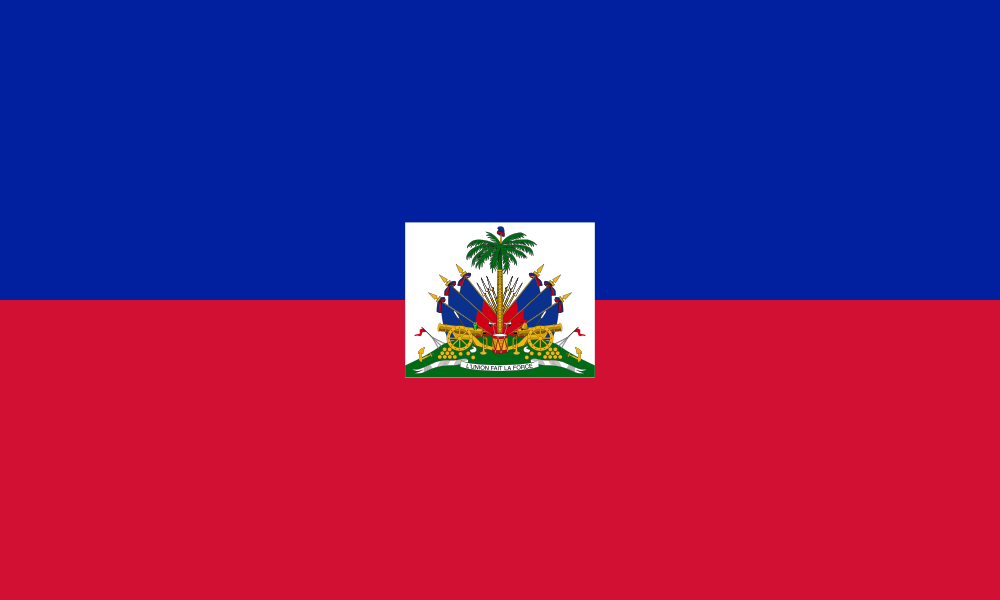
🇭🇹 Country Profile: Haiti
🌍 Introduction
Haiti is a Caribbean country located on the western portion of the island of Hispaniola, known for its mountainous terrain, historic heritage, and vibrant cultural traditions. It shares the island with the Dominican Republic to the east. Its geography includes rugged mountains, valleys, and coastal plains along both the Atlantic Ocean and the Caribbean Sea.
📌 General Overview
Official Name: Republic of Haiti.
Capital: Port-au-Prince.
Official Languages: Haitian Creole and French.
Government Type: Republic (transitional governance arrangements in place).
Currency: Haitian Gourde (HTG).
Time Zone: Eastern Standard Time (EST).
🗺️ Country-Specific Maps
Political maps show departmental boundaries, major cities, and international borders. Administrative maps present departments, arrondissements, and communes. Physical maps highlight mountain ranges, valleys, and coastal plains. Hydrology maps show rivers and watershed areas. Transportation maps display highways, ports, and airport facilities. Thematic maps often include land use, elevation, and environmental zones.
👥 Demography & Population
Haiti has an estimated population of over 11 million people. Major cities include Port-au-Prince, Cap-Haïtien, and Les Cayes. Population density is high in urban and coastal areas. Settlement patterns are influenced by terrain, agriculture, and access to services. Much of the population lives in small towns and rural communities.
🏛️ Administrative Divisions
Haiti is divided into departments, which are further subdivided into arrondissements and communes. Departmental capitals serve as administrative and service centers. Local governments manage municipal-level services where operational.
💰 Economy & Industries
The economy is supported by agriculture, small-scale manufacturing, trade, and services. Key agricultural products include rice, maize, coffee, and fruits. Informal commerce and small enterprises play an important role. Ports and local markets are central to trade activity.
🌟 Places of Interest & Tourism
Notable places include the Citadelle Laferrière, historic towns, mountain landscapes, and coastal beaches. Cultural heritage sites and historic fortifications are major landmarks. Art, crafts, and cultural festivals are important visitor interests.
🚆 Transportation & Connectivity
Transportation is mainly road-based, with networks connecting major cities and ports. International airports serve the capital and northern region. Seaports support cargo and passenger movement. There is no active national passenger rail system.
🌦️ Climate & Geography
Haiti has a tropical climate with warm temperatures year-round and seasonal rainfall. Mountain areas are cooler than coastal plains. The terrain is largely mountainous with limited flat agricultural land. Rainfall varies by region and elevation.
📜 History & Culture
Haiti has a unique history in the Caribbean, with strong roots in African heritage and early independence history. Cultural traditions include music, painting, crafts, and festivals. Artistic expression and community traditions are central to national culture.
📌 Quick Facts & Trivia
Haiti occupies the western third of Hispaniola island. It is one of the most mountainous countries in the Caribbean. The Citadelle is one of the largest historic fortresses in the Americas. Haitian art and painting styles are widely recognized. Creole language is widely spoken nationwide.
Downloads
Download JSON file Download KML file Download Shapefile Download FlagTopics covered