
Honduras
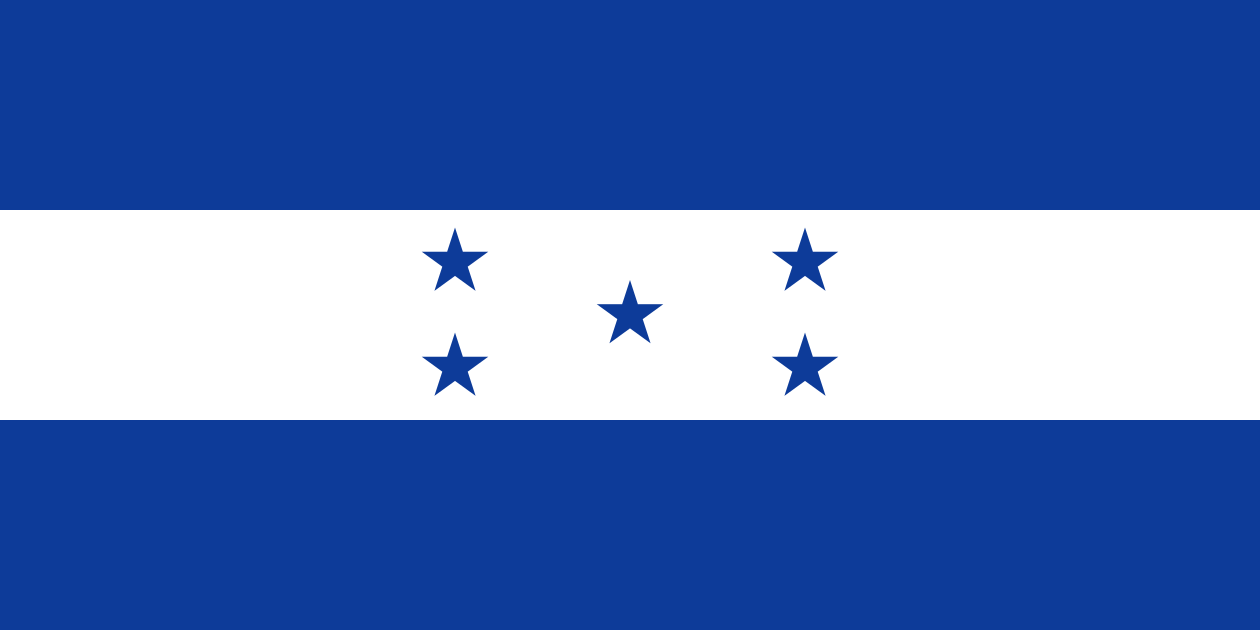
National Flag of Honduras
🇭🇳 Country Profile: Honduras
🌍 Introduction
Honduras is a Central American country known for its mountainous interior, Caribbean and Pacific coastlines, and rich archaeological heritage. Located between Guatemala, El Salvador, and Nicaragua, it has access to both the Caribbean Sea and the Pacific Ocean. Its geography includes highlands, river valleys, tropical forests, and coastal plains, creating diverse natural regions.
📌 General Overview
Official Name: Republic of Honduras.
Capital: Tegucigalpa.
Official Language: Spanish.
Government Type: Presidential republic.
Currency: Honduran Lempira (HNL).
Time Zone: Central Standard Time (CST).
🗺️ Country-Specific Maps
Political maps show departmental boundaries, major cities, and international borders. Administrative maps present departments and municipalities. Physical maps highlight mountain ranges, forest zones, and coastal lowlands. Hydrology maps show river systems and watersheds. Transportation maps display highways, ports, and airports. Thematic maps often include land cover, elevation, and protected areas.
👥 Demography & Population
Honduras has an estimated population of about 10 million people. Major cities include Tegucigalpa, San Pedro Sula, and La Ceiba. Population distribution is concentrated in urban corridors and agricultural valleys. Many communities also live in rural and forested regions. Settlement patterns are influenced by terrain and economic activity.
🏛️ Administrative Divisions
Honduras is divided into departments, which are further subdivided into municipalities. Departmental capitals act as administrative and service centers. Municipal governments manage local planning and services.
💰 Economy & Industries
The economy is supported by agriculture, manufacturing, services, and trade. Key agricultural products include bananas, coffee, palm oil, and sugarcane. Manufacturing, textiles, and food processing are important sectors. Port trade and logistics also contribute significantly.
🌟 Places of Interest & Tourism
Notable places include the Maya archaeological site of Copán, Caribbean Bay Islands, rainforest reserves, and mountain parks. Roatán and other islands are popular for diving and beach tourism. Cultural and nature tourism are both important.
🚆 Transportation & Connectivity
Transportation is mainly road-based, with highways linking major cities and border crossings. International airports serve key urban and tourism areas. Seaports on both coasts support cargo and passenger traffic. Rail transport is very limited.
🌦️ Climate & Geography
Honduras has a tropical climate with warm temperatures and seasonal rainfall. Coastal areas are hot and humid, while highland areas are cooler. The terrain is largely mountainous inland with narrow coastal plains. Rainfall varies by region and elevation.
📜 History & Culture
Honduras has a history rooted in Indigenous civilizations, including the Maya, and later colonial development. Cultural traditions include crafts, music, festivals, and regional cuisine. Archaeological sites and colonial towns reflect historical layers.
📌 Quick Facts & Trivia
Honduras has coastlines on two different seas. Much of the country is mountainous. The Copán site is one of the major Maya heritage locations. Bananas and coffee are key export crops. Coral reef systems are found around the Bay Islands.
Downloads
Download JSON file Download KML file Download Shapefile Download FlagTopics covered