
Mali
National Flag of Mali
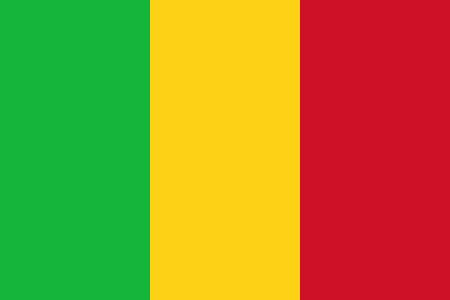
🇲🇱 Country Profile: Mali
🌍 Introduction
Mali is a large landlocked country in West Africa known for its desert and Sahel landscapes, historic trade cities, and river valleys. It stretches from the Sahara Desert in the north to savanna regions in the south. The Niger River is the country’s main geographic feature and supports major population and farming areas.
📌 General Overview
Official Name: Republic of Mali.
Capital: Bamako.
Official Language: French.
Government Type: Republic (under transitional authorities).
Currency: West African CFA Franc (XOF).
Time Zone: Greenwich Mean Time (GMT).
🗺️ Country-Specific Maps
Political maps show regional boundaries, major towns, and international borders. Administrative maps present regions and cercles (districts). Physical maps highlight the Sahara, Sahel belt, plateaus, and the Niger River valley. Hydrology maps show river systems and inland delta areas. Transportation maps display highways, river routes, and airports. Thematic maps often include climate zones, vegetation belts, and land use.
👥 Demography & Population
Mali has an estimated population of over 22 million people. Major cities include Bamako, Sikasso, and Mopti. Population distribution is higher in the southern and central river regions. Northern desert zones are sparsely populated. Many communities live in rural agricultural and pastoral areas.
🏛️ Administrative Divisions
Mali is divided into regions and a capital district, which are further subdivided into cercles and communes. Regional capitals act as administrative and service centers. Local communes manage community-level governance.
💰 Economy & Industries
The economy is supported by agriculture, livestock, mining, and trade. Key products include cotton, cereals, and livestock. Gold mining is a major export sector. River-based farming supports many communities.
🌟 Places of Interest & Tourism
Notable places include historic desert-edge cities, river towns, cultural heritage areas, and escarpment landscapes. Timbuktu and Dogon Country are well-known heritage regions. Cultural and landscape tourism are major themes.
🚆 Transportation & Connectivity
Transportation infrastructure includes highways, airports, and river transport along the Niger. Road corridors connect major southern cities and border crossings. River boats are used seasonally. Rail service exists on limited routes.
🌦️ Climate & Geography
Mali has climate zones ranging from arid desert in the north to semi-arid Sahel and tropical savanna in the south. Rainfall increases toward the south. Temperatures are generally high, especially in desert regions. Terrain includes plains, plateaus, and river floodplains.
📜 History & Culture
Mali has a rich history of historic empires and trans-Saharan trade networks. Cultural traditions include music, storytelling, crafts, and scholarship. Historic learning centers and trade cities played major regional roles.
📌 Quick Facts & Trivia
Mali was home to major historic West African empires. The Niger River creates an important inland delta. Gold is one of its leading exports. Much of the north lies within the Sahara. Traditional music is internationally recognized.
Downloads
Download JSON file Download KML file Download Shapefile Download FlagTopics covered