
Mauritania
National Flag of Mauritania
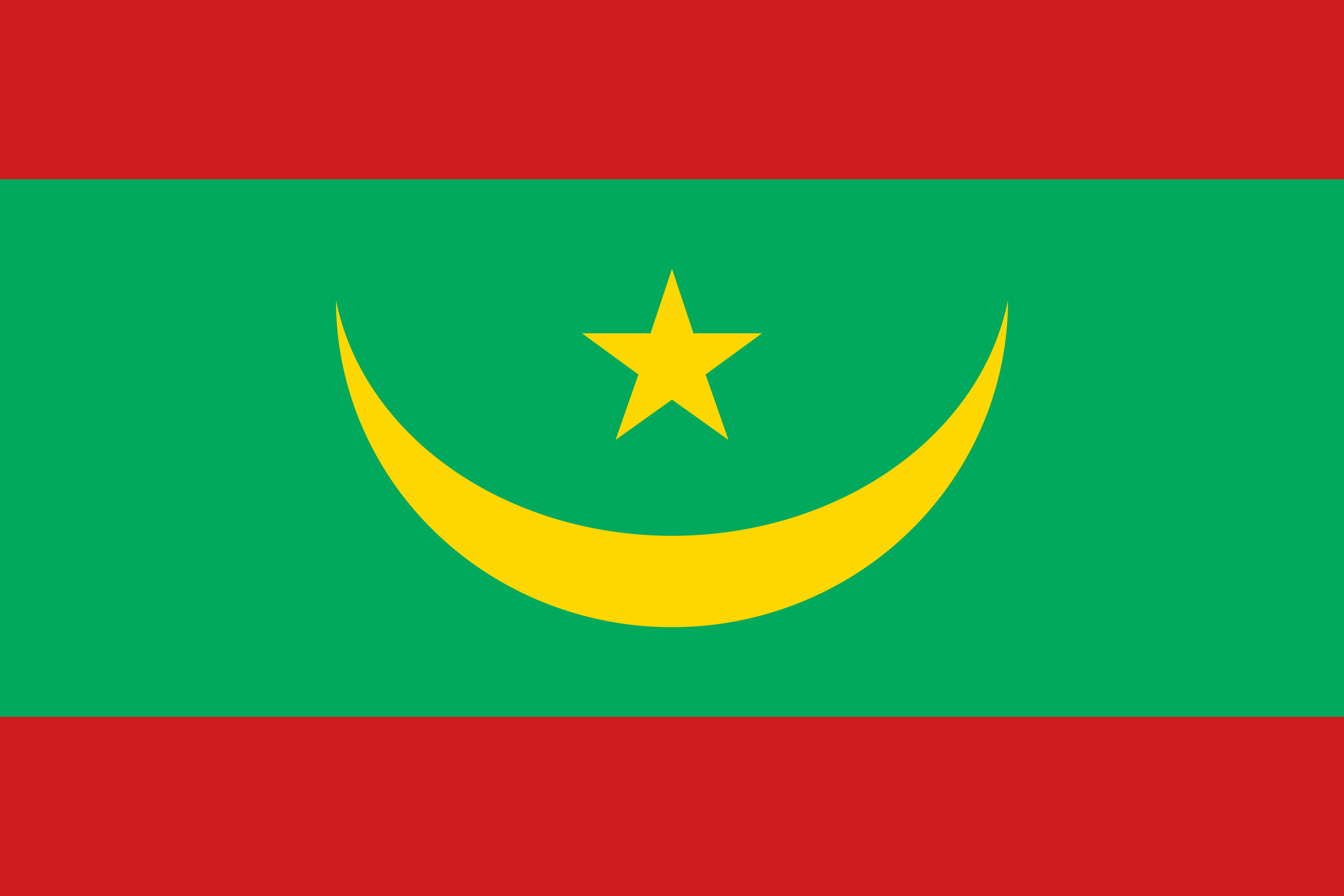
🇲🇷 Country Profile: Mauritania
🌍 Introduction
Mauritania is a large country in northwest Africa known for its vast desert landscapes, Atlantic coastline, and caravan trade heritage. It lies at the transition between North Africa and West Africa, with most of its territory within the Sahara Desert. Its geography includes sand dunes, rocky plateaus, coastal plains, and desert basins.
📌 General Overview
Official Name: Islamic Republic of Mauritania.
Capital: Nouakchott.
Official Language: Arabic.
Government Type: Presidential republic.
Currency: Mauritanian Ouguiya (MRU).
Time Zone: Greenwich Mean Time (GMT).
🗺️ Country-Specific Maps
Political maps show regional boundaries, major towns, and international borders. Administrative maps present regions and departments. Physical maps highlight desert plateaus, dune fields, and coastal zones. Hydrology maps show seasonal rivers and desert depressions. Transportation maps display highways, rail corridors, and ports. Thematic maps often include mineral zones, climate regions, and land cover.
👥 Demography & Population
Mauritania has an estimated population of about 5 million people. Major cities include Nouakchott and Nouadhibou. Population distribution is concentrated in coastal and southern regions. Large interior desert areas are sparsely populated. Nomadic and semi-nomadic communities are present in some regions.
🏛️ Administrative Divisions
Mauritania is divided into regions, which are further subdivided into departments and communes. Regional capitals serve as administrative and service centers. Local administrations manage community governance and services.
💰 Economy & Industries
The economy is supported by mining, fisheries, livestock, and services. Key resources include iron ore and other minerals. Marine fisheries along the Atlantic coast are important. Pastoralism supports rural livelihoods.
🌟 Places of Interest & Tourism
Notable places include desert landscapes, historic caravan towns, coastal reserves, and geological formations such as the Richat Structure. Desert heritage sites and coastal areas are main attractions. Cultural and desert tourism are key themes.
🚆 Transportation & Connectivity
Transportation infrastructure includes highways, a major mining railway, seaports, and airports. Rail lines are primarily used for mineral transport. Road networks connect main towns and border points. Ports support mining and fishing exports.
🌦️ Climate & Geography
Mauritania has a predominantly desert climate with very low rainfall and high temperatures. Southern areas receive more seasonal rain than the north. Sand dunes and rocky deserts dominate the terrain. Coastal zones are influenced by ocean conditions.
📜 History & Culture
Mauritania has a history shaped by desert trade routes and regional empires. Cultural traditions include poetry, music, crafts, and nomadic heritage practices. Caravan trade and scholarly traditions were historically important.
📌 Quick Facts & Trivia
Most of Mauritania lies within the Sahara Desert. It has one of the world’s longest heavy-haul mineral railways. Iron ore is a major export. The Richat Structure is a well-known circular geological feature. Coastal fisheries are economically significant.