
Mongolia
National Flag of Mongolia
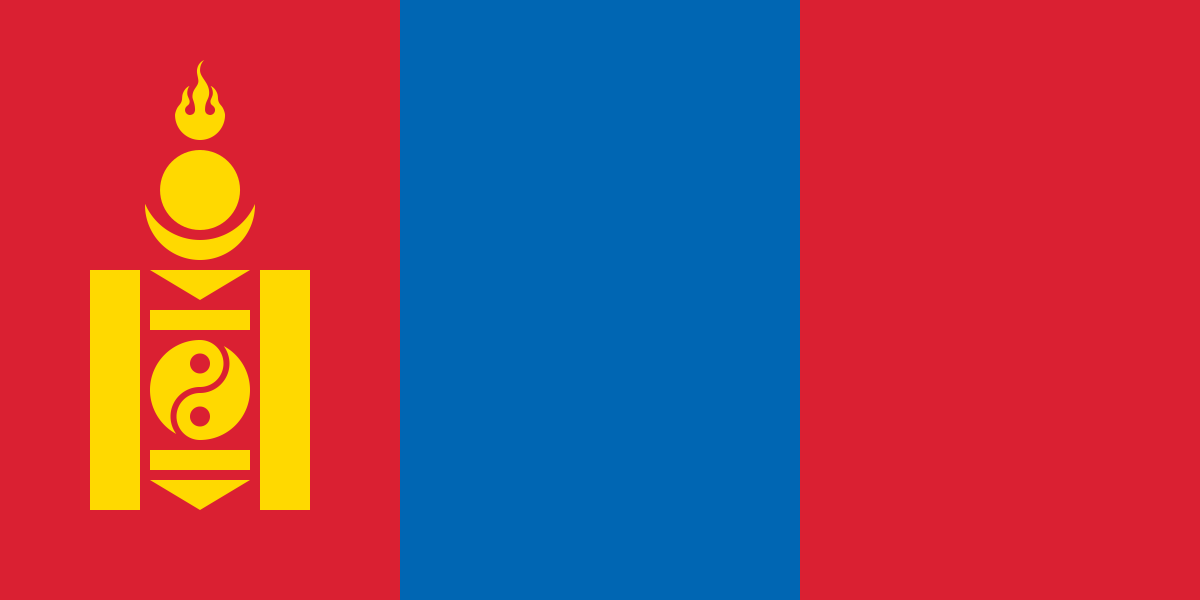
🇲🇳 Country Profile: Mongolia
🌍 Introduction
Mongolia is a landlocked country in East and Central Asia, known for its vast steppe landscapes, nomadic heritage, and low population density. Located between Russia and China, it has historically been a crossroads of steppe cultures and trade routes. Its geography includes grasslands, deserts, mountains, and high plateaus, creating wide open natural environments.
📌 General Overview
Official Name: Mongolia.
Capital: Ulaanbaatar.
Official Language: Mongolian.
Government Type: Semi-presidential republic.
Currency: Mongolian Tögrög (MNT).
Time Zone: Mongolia Standard Time (varies by zone).
🗺️ Country-Specific Maps
Political maps show provincial boundaries, major cities, and international borders. Administrative maps present provinces (aimags) and districts. Physical and topographic maps highlight steppe plains, mountain systems, and desert regions. Thematic maps show pasture zones, mineral resources, and climate regions. Transportation maps display road, rail, and cross-border corridors.
👥 Demography & Population
Mongolia has an estimated population of about 3.5 million people. Major urban centers include Ulaanbaatar, Darkhan, and Erdenet. A large share of the population lives in and around the capital, while many others live in rural areas. Settlement patterns are influenced by pasture land, water sources, and economic centers.
🏛️ Administrative Divisions
Mongolia is divided into provinces called aimags and a capital city with special status. Provinces are further subdivided into districts (soums) and local communities. Provincial centers act as administrative and service hubs.
💰 Economy & Industries
The economy is supported by mining, livestock herding, agriculture, and services. Major resources include coal, copper, and other minerals. Animal husbandry is a key traditional activity, producing meat, wool, and dairy products. Trade and transport services are also important.
🌟 Places of Interest & Tourism
Notable places include steppe and desert landscapes, mountain national parks, historic monasteries, and cultural heritage sites. Popular destinations include the Gobi Desert, large freshwater lakes, and grassland regions known for traditional nomadic life.
🚆 Transportation & Connectivity
Transportation includes national road networks, rail corridors, and airports. Rail lines connect major cities and link with neighboring countries. Long-distance routes cross steppe and desert terrain. Air transport is important for remote regions.
🌦️ Climate & Geography
Mongolia has a strongly continental climate with long, cold winters and warm summers. Rainfall is generally low, especially in desert and steppe areas. The terrain includes grasslands, high plateaus, mountain ranges, and desert zones. Elevation and distance from oceans shape climate patterns.
📜 History & Culture
Mongolia has a history shaped by nomadic empires, steppe traditions, and regional trade networks. Cultural heritage includes horsemanship, oral epics, music, and traditional crafts. Portable dwellings and pastoral lifestyles are important cultural symbols.
📌 Quick Facts & Trivia
Mongolia is one of the least densely populated countries in the world. Large areas are covered by steppe and desert. Livestock outnumber people by a wide margin. Nomadic pastoral traditions remain culturally important. Winters can be extremely cold across much of the country.
Downloads
Download JSON file Download KML file Download Shapefile Download FlagTopics covered