
North Macedonia
National Flag of North Macedonia
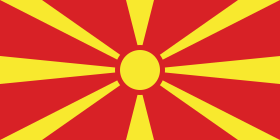
🇲🇰 North Macedonia: Country Profile
📌 Introduction
North Macedonia, located in the heart of the Balkans, is a country rich in history, culture, and natural beauty. From its ancient ruins to its picturesque lakes and mountainous landscapes, North Macedonia offers visitors a diverse experience. It is home to the old town of Ohrid, a UNESCO World Heritage Site, and is known for its vibrant traditions, festivals, and delicious cuisine.
🌍 General Overview
- 📍 Official Name: Republic of North Macedonia
- 🏙️ Capital: Skopje
- 🗣️ Official Language: Macedonian
- 🏛️ Government Type: Parliamentary Republic
- 💰 Currency: Macedonian Denar (MKD)
- ⏳ Time Zone: Central European Time (CET)
- 🎉 Independence: North Macedonia gained independence from Yugoslavia on September 8, 1991.
🗺️ Country-Specific Maps
Explore North Macedonia with various maps:
- 🗺️ Political Map: Showing the capital Skopje and other key cities like Bitola, Ohrid, and Prilep.
- 🏞️ Topographic Map: Highlighting the country’s mountains, rivers, and lakes, including Lake Ohrid and Lake Prespa.
- 🌊 Tourist Map: Featuring North Macedonia’s most iconic spots, including Ohrid, Skopje, Pelister National Park, and more.
👥 Demography & Population
- 👨👩👧👦 Population: ~2.1 million (2024)
- 🏙️ Major Cities: Skopje, Bitola, Ohrid, Prilep, Kumanovo
- 🌆 Urbanization Rate: ~59%
- ⏳ Life Expectancy: ~77 years
- 🏳️ Ethnic Groups: Predominantly Macedonian, with significant Albanian, Turkish, Roma, and Serb populations.
🏛️ Administrative Divisions
North Macedonia is divided into 80 municipalities. Notable regions include:
- Skopje (Capital and largest city)
- Bitola (Cultural and historical center)
- Ohrid (Tourism hub and UNESCO World Heritage site)
- Prilep (Known for its tobacco production and historic landmarks)
💰 Economy & Industries
- 📈 GDP: ~$13.7 billion (2024)
- 🏭 Key Sectors:
- Agriculture: Known for tobacco, fruits, vegetables, and wine production 🌾
- Manufacturing: Textiles, machinery, and food processing are prominent industries 🏭
- Mining: The country is rich in coal, copper, lead, and zinc 🏔️
- Tourism: The Ohrid region, Lake Ohrid, and Pelister National Park are major tourist attractions 🏖️
- Services: The finance and telecommunications sectors are growing rapidly 💻
🌟 Places of Interest & Tourism
- 🏰 Ohrid Old Town: A UNESCO World Heritage Site with ancient churches, monasteries, and Roman ruins 🏛️
- 🏞️ Lake Ohrid: One of Europe’s oldest and deepest lakes, offering stunning views and cultural significance 🌊
- 🏔️ Pelister National Park: Known for its pine forests, alpine lakes, and mountain hikes 🌲
- 🕌 Skopje Old Bazaar: A lively historic area with Ottoman-era architecture, mosques, and restaurants 🕌
- ⛪ Church of Saint John at Kaneo: A beautiful church located on the cliffs of Lake Ohrid 🏞️
- 🏛️ Bitola: A city rich in Ottoman and Roman heritage, home to Heraclea Lyncestis, an ancient archaeological site 🏺
🚆 Transportation & Connectivity
- ✈️ Major Airports: Skopje International Airport, Ohrid St. Paul the Apostle Airport serve both domestic and international flights ✈️
- 🚆 Railways: North Macedonia has rail connections to Serbia, Greece, and Bulgaria 🚂
- 🚗 Public Transport: Bus and taxi services are available, with most towns and cities well connected 🚌
- 🚢 Ports & Marinas: North Macedonia is landlocked but has access to the Adriatic Sea via the Port of Thessaloniki in Greece 🛳️
🌦️ Climate & Geography
- ☀️ Climate: North Macedonia has a continental climate, with hot summers and cold winters in the lowlands and colder winters in the mountains.
- 🏞️ Geography:
- Mountains: The Jablanica, Pelister, and Šar Mountains offer hiking, skiing, and wildlife watching 🏔️
- Lakes: Lake Ohrid and Lake Prespa are pristine freshwater lakes with rich biodiversity 🌊
- Rivers: The Vardar River runs through the country, connecting it to the Aegean Sea 🌊
📜 History & Culture
- ⚔️ Early History: North Macedonia has a rich cultural heritage, with ancient civilizations, including Greek, Roman, and Ottoman influences.
- 🏛️ Independence: North Macedonia declared its independence from Yugoslavia in 1991 after a referendum.
- 🎶 Culture: The country has a blend of Slavic, Ottoman, and Balkan traditions, with a deep connection to music, dance, and art.
- 🍽️ Cuisine: North Macedonian cuisine features grilled meats, cheese, ajvar (pepper-based dip), burek (savory pastry), and rakija (fruit brandy) 🍽️
- 🎉 Festivals: The Ohrid Summer Festival, Skopje Jazz Festival, and Bitola International Festival celebrate the country’s artistic heritage 🎶
🔍 Quick Facts & Trivia
- 🛡️ National Motto: “Free or die”
- 🦅 National Animal: Lynx
- 🌸 National Flower: Poppy
- 🎲 Famous Landmark: Church of Saint John at Kaneo
- 🌍 UNESCO World Heritage Sites: Ohrid Old Town and Lake Ohrid