
Oman
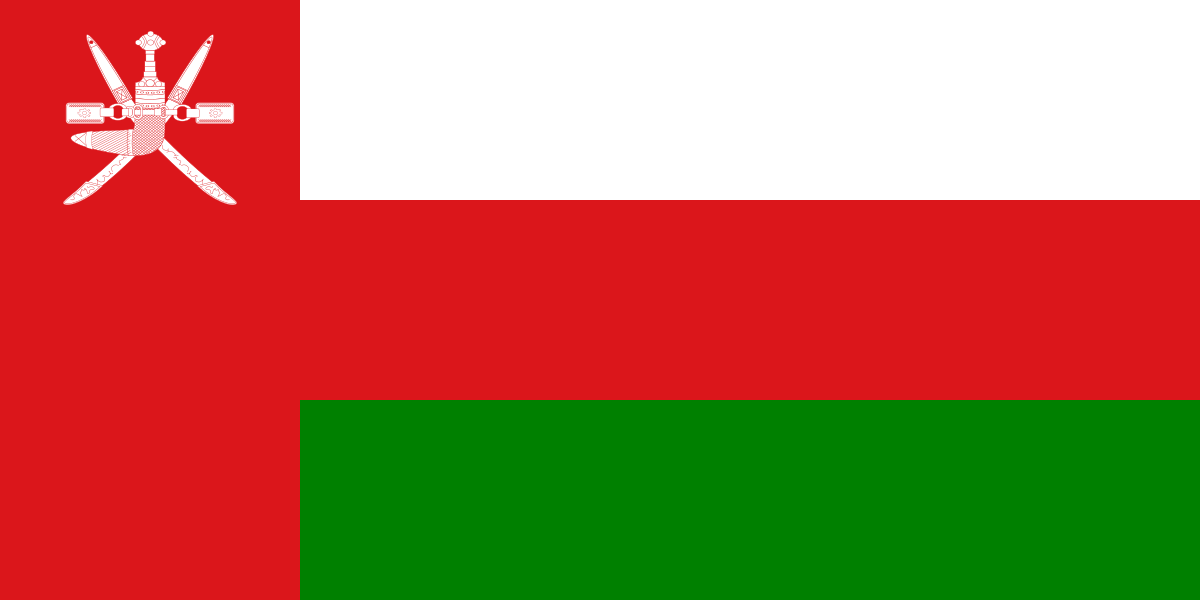
National Flag of Oman
🇴🇲 Country Profile: Oman
🌍 Introduction
Oman is a country in Western Asia located on the southeastern coast of the Arabian Peninsula, known for its desert landscapes, mountain ranges, and long maritime history. Facing the Arabian Sea and the Gulf of Oman, it has historically been connected to Indian Ocean trade routes. Its geography includes deserts, rugged mountains, fertile coastal plains, and strategic coastal waterways.
📌 General Overview
Official Name: Sultanate of Oman.
Capital: Muscat.
Official Language: Arabic.
Government Type: Absolute monarchy.
Currency: Omani Rial (OMR).
Time Zone: Gulf Standard Time (GST).
🗺️ Country-Specific Maps
Political maps show governorates, major cities, and international borders. Administrative maps present governorate and district divisions. Physical maps highlight desert regions, coastal plains, and the Al Hajar mountain range. Coastal maps show ports, bays, and maritime zones. Transportation maps display highways, ports, and logistics corridors. Thematic maps often include elevation, land cover, and climate zones.
👥 Demography & Population
Oman has an estimated population of about 4–5 million people. Major cities include Muscat, Salalah, Sohar, and Nizwa. Much of the population lives in coastal urban areas. The population includes citizens and a significant expatriate workforce. Settlement patterns are influenced by water availability, jobs, and infrastructure.
🏛️ Administrative Divisions
Oman is divided into governorates, which are further subdivided into districts and local administrative units. Governorate centers function as regional administrative and service hubs. Municipal structures manage local services and planning.
💰 Economy & Industries
The economy is supported by oil and gas production, industry, logistics, and services. Energy exports are a major revenue source. Other sectors include ports and shipping, manufacturing, fisheries, and tourism. Economic diversification programs promote non-oil industries.
🌟 Places of Interest & Tourism
Notable places include historic forts and old towns, desert dune regions, mountain wadis, and coastal landscapes. Popular destinations include Muscat’s cultural sites, Salalah’s green seasonal landscapes, and desert and canyon areas. Heritage architecture and natural scenery are key attractions.
🚆 Transportation & Connectivity
Transportation is mainly road-based, with modern highways connecting cities, ports, and border crossings. Major seaports support trade and industry. International airports serve Muscat and regional cities. Transport maps highlight coastal corridors and interior mountain routes.
🌦️ Climate & Geography
Oman has a hot desert climate in most areas, with very warm summers and mild winters. Coastal and southern regions receive more seasonal rainfall. The terrain includes sandy deserts, rocky plateaus, mountain ranges, and narrow coastal plains. Elevation and monsoon influence create regional climate variation.
📜 History & Culture
Oman has a long history of seafaring, trade, and regional influence across the Indian Ocean. Cultural traditions include maritime heritage, crafts, music, and architecture. Forts, mosques, and old trading towns reflect historical continuity and regional identity.
📌 Quick Facts & Trivia
Oman has a long coastline along major regional seas. Historic forts are found across many regions. Desert and mountain landscapes coexist within short distances. Maritime trade played a major role in its history. Traditional markets and crafts remain culturally important.
Downloads
Download JSON file Download KML file Download Shapefile Download FlagTopics covered