
Papua New Guinea
National Flag of Papua New Guinea
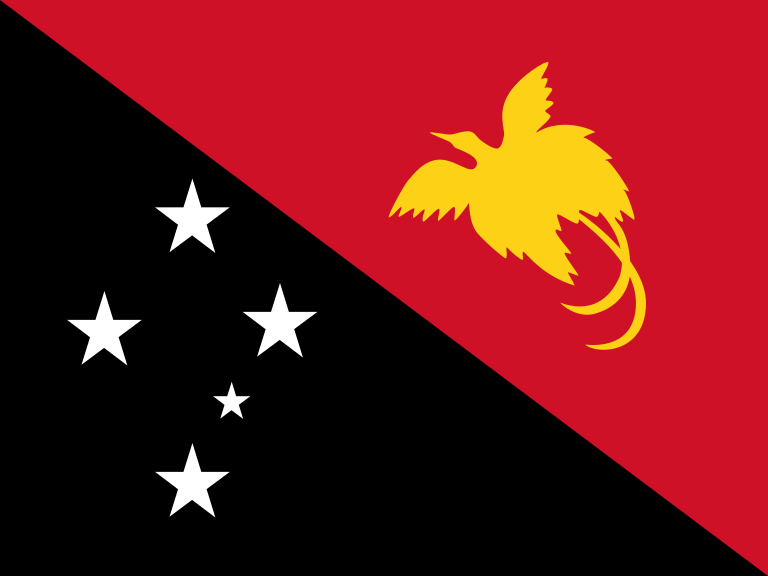
🇵🇬 Papua New Guinea: Country Profile
📌 Introduction
Papua New Guinea (PNG) is a country located in the southwestern Pacific Ocean, occupying the eastern half of the island of New Guinea and numerous smaller islands. Known for its cultural diversity and rich natural resources, it is one of the most linguistically diverse nations in the world. The country’s terrain is mountainous, with tropical rainforests, making it a haven for wildlife and eco-tourism.
🌍 General Overview
- Official Name: Independent State of Papua New Guinea
- Capital: Port Moresby 🌆
- Largest City: Port Moresby 🏙️
- Official Language: English, Tok Pisin, Hiri Motu 🗣️
- Currency: Kina (PGK) 💵
- Government: Constitutional Monarchy with a Parliamentary System 🏛️
- Area: 462,840 km² 🌍
- Population: ~9 million (2025 est.) 👥
- Time Zone: UTC +10 ⏰
🗺️ Country-Specific Maps
Papua New Guinea is a land of rugged mountains, rainforests, and coastal areas. It is divided into several provinces, each offering a unique geographic and cultural experience.
👥 Demography & Population
- Ethnic Groups:
- Papuans – 84%
- Melanesians – 10%
- Other Pacific Islanders – 4%
- Asians – 2%
- Religions:
- Christianity (Roman Catholicism, Protestantism) – 96% ⛪
- Indigenous Beliefs – 4%
🏙️ Administrative Divisions
Papua New Guinea is divided into 22 provinces, including the National Capital District. The provinces are:
- Central
- Chimbu
- East New Britain
- East Sepik
- Enga
- Gulf
- Hela
- Madang
- Manus
- Milne Bay
- Morobe
- National Capital District
- New Ireland
- North Fly
- Northern
- Sandaun
- Southern Highlands
- Western Highlands
- West New Britain
- West Sepik
- Western
- Autonomous Region of Bougainville
💰 Economy & Industries
- Major Sectors: Agriculture 🌾, Mining ⛏️, Oil & Gas 🛢️, Fishing 🎣
- Top Exports: Gold, copper, oil, timber 🌳, coffee, cocoa 🍫
- GDP: ~$25 billion (2025 est.)
- Major Trade Partners: Australia 🇦🇺, China 🇨🇳, Japan 🇯🇵, New Zealand 🇳🇿
🌄 Places of Interest & Tourism
- Kokoda Track: Famous trekking route through dense forests, used in World War II 🏞️
- Tufi Dive Resort: Known for its amazing coral reefs, waterfalls, and diving spots 🐠
- Sepik River: Known for its traditional villages and unique culture 🚣♂️
- Rabaul: A town with a rich history and volcanic landscapes 🌋
🚆 Transportation & Connectivity
- Main Airport: Jacksons International Airport (POM) ✈️
- Ferry Services: Connecting coastal and island provinces 🛥️
- Roads: Limited in some areas due to mountainous terrain 🚗
🌦️ Climate & Geography
- Climate: Tropical, with a wet season from December to March 🌧️
- Geographical Features:
- Rugged mountains, tropical rainforests 🌳
- Vast river systems and coral reefs 🌊
- Coastal areas and islands 🌴
🏛️ History & Culture
- Colonial History: Papua New Guinea was colonized by Germany, Britain, and Australia before gaining independence in 1975.
- Independence: Papua New Guinea became an independent nation on September 16, 1975.
- Culture: The country is home to over 800 languages and a wide variety of traditions, including elaborate ceremonial practices, art, and dances.
- Famous Festival: The National Mask Festival celebrates PNG’s diverse cultures through vibrant masks, dances, and performances 🎭
🍽️ Cuisine
- Taro, sweet potatoes, and sago are staple foods 🍠
- Fish and seafood are widely consumed 🐟
- Mumu: A traditional dish prepared in an earth oven, often with pork or chicken 🍖
📊 Quick Facts & Trivia
- Papua New Guinea has the highest number of languages spoken in the world. There are over 800 languages, many of which are spoken by small communities. 🗣️
- It is one of the last places on Earth to have been inhabited by humans. Many areas remain remote and largely unexplored. 🌍
- PNG has a significant mining industry, with large reserves of gold, copper, and oil. ⛏️