
Paraguay
National Flag of Paraguay
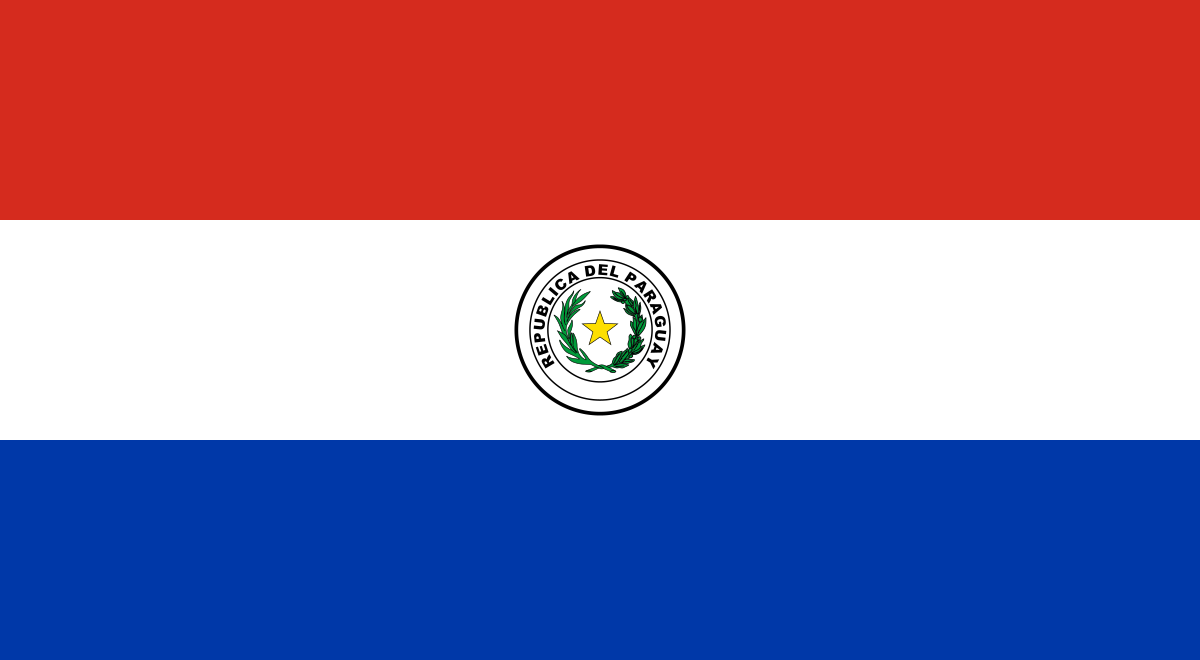
🇵🇾 Paraguay: Country Profile
📌 Introduction
Paraguay, a landlocked country in South America, is known for its rich indigenous heritage, vast Gran Chaco plains, and the Paraguay River, which divides the nation into eastern and western regions. It is one of the few bilingual countries in the world, where both Spanish and the indigenous Guaraní language hold official status.
🌍 General Overview
- Official Name: Republic of Paraguay
- Capital: Asunción 🏙️
- Largest City: Asunción
- Official Languages: Spanish 🇪🇸, Guaraní 🇵🇾
- Currency: Paraguayan Guaraní (PYG) 💰
- Government: Presidential Republic 🏛️
- Area: 406,752 km² 🌍
- Population: ~7.4 million (2025 est.) 👥
- Time Zone: UTC -4 ⏰
🗺️ Country-Specific Maps
Paraguay is bordered by Brazil, Argentina, and Bolivia. The Paraguay River plays a vital role in transportation and trade.
👥 Demography & Population
- Ethnic Groups:
- Mestizo (mixed European and Indigenous) – 95% 🌍
- Indigenous Peoples – 2% 🏕️
- Other (European, Asian) – 3%
- Religions:
- Roman Catholicism (88%) ✝️
- Protestantism (7%)
- Indigenous beliefs & other (5%)
- Urban Population: ~65% live in urban areas, with Asunción being the main hub.
🏙️ Administrative Divisions
Paraguay is divided into 17 departments and the capital district:
- Asunción (Capital District)
- Central – Most populous department
- Alto Paraná – Economic hub, home to Ciudad del Este
- Itapúa – Famous for Jesuit missions
- Chaco Region: Covers over 60% of the land but has less than 10% of the population
💰 Economy & Industries
- Major Sectors: Agriculture 🌾, Hydropower ⚡, Livestock 🐄, and Manufacturing 🏭
- Top Exports: Soybeans, beef, hydroelectricity, corn, and wheat
- GDP: ~$45 billion (2025 est.)
- Major Trade Partners: Brazil 🇧🇷, Argentina 🇦🇷, China 🇨🇳, EU 🇪🇺, United States 🇺🇸
🌄 Places of Interest & Tourism
- Itaipu Dam: One of the world’s largest hydroelectric dams ⚡
- Jesuit Missions of La Santísima Trinidad: UNESCO World Heritage Site 🏛️
- Ybycuí National Park: Beautiful waterfalls and hiking trails 🌿
- Ciudad del Este: Shopping and trade hub on the Brazil-Paraguay border 🏙️
- Saltos del Monday: Stunning waterfalls near the Brazilian border 🌊
🚆 Transportation & Connectivity
- Major Airport: Silvio Pettirossi International Airport (ASU) ✈️
- Road Network: Well-developed in the east, limited in the western Chaco region 🚗
- Waterways: Paraguay River serves as a major trade route 🚤
- Railways: Limited; most transport is by road and river 🚂
🌦️ Climate & Geography
- Climate: Subtropical, with hot summers and mild winters ☀️❄️
- Seasons:
- Summer: October – March (Hot & Humid) 🔥
- Winter: May – August (Mild & Dry) ❄️
- Major Rivers: Paraguay River, Paraná River, Pilcomayo River
- Natural Hazards: Droughts, floods, and occasional wildfires 🌊🔥
🏛️ History & Culture
- Ancient History: Home to the indigenous Guaraní people 🏕️
- Colonial Rule: Spanish colony from the 16th century until independence in 1811 🇪🇸
- The War of the Triple Alliance (1864-1870): Devastating conflict against Argentina, Brazil, and Uruguay 🏹
- Languages & Identity: Paraguay is one of the few countries where an indigenous language (Guaraní) is spoken by the majority of the population 🗣️
- Cultural Events:
- Fiesta de San Juan: Traditional festival with fire-related games 🎆
- Carnival of Encarnación: The country’s largest carnival celebration 🎭
- National Tereré Day: Celebrates the popular cold yerba mate drink 🧉
🍽️ Cuisine
- Sopa Paraguaya: Cornbread-like dish, despite its name meaning “Paraguayan Soup” 🥖
- Chipa: Cheese bread made from cassava flour 🧀
- Asado: Paraguayan-style barbecue 🍖
- Tereré: A national cold-brewed yerba mate drink 🧉
- Mbejú: A delicious starch-based pancake 🥞
📊 Quick Facts & Trivia
- Paraguay is one of the world’s largest exporters of hydroelectric power. ⚡
- The country has no coastline but has a navy! 🚢
- Guaraní is spoken by nearly 90% of Paraguayans. 🗣️
- Paraguay has the largest drinking water reservoir in the world (Guarani Aquifer). 💧