
Saint Lucia
National Flag of Saint Lucia
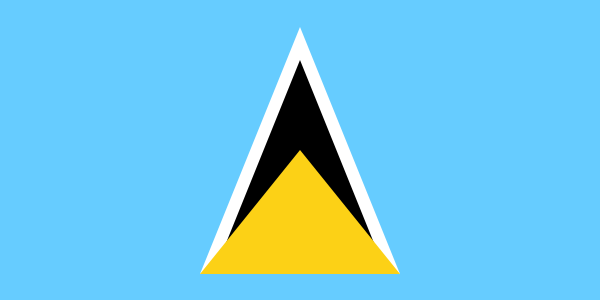
🇱🇨 Country Profile: Saint Lucia
🌍 Introduction
Saint Lucia is a Caribbean island country known for its volcanic peaks, rainforest landscapes, and scenic coastal bays. Located in the eastern Caribbean Sea, it is part of the Lesser Antilles island chain. Its geography features steep mountains, geothermal areas, fertile valleys, and beach-lined coasts, giving it a dramatic natural setting.
📌 General Overview
Official Name: Saint Lucia.
Capital: Castries.
Official Language: English.
Government Type: Parliamentary monarchy.
Currency: East Caribbean Dollar (XCD).
Time Zone: Atlantic Standard Time (AST).
🗺️ Country-Specific Maps
Political maps show district boundaries and major towns. Administrative maps present quarters and local areas. Physical maps highlight volcanic mountains, forest reserves, and coastal plains. Topographic maps show sharp elevation changes and watershed patterns. Transportation maps display road networks, ports, and airport facilities. Thematic maps often include tourism zones, land cover, and protected areas.
👥 Demography & Population
Saint Lucia has an estimated population of about 180,000 people. Major population centers include Castries, Vieux Fort, and Gros Islet. Most residents live in coastal communities and nearby valleys. Settlement patterns are shaped by terrain, road access, and tourism development.
🏛️ Administrative Divisions
Saint Lucia is divided into quarters (districts), which function as the main administrative areas. Quarter centers act as local administrative and service hubs. National and local authorities coordinate governance and services.
💰 Economy & Industries
The economy is supported by tourism, services, and agriculture. Key sectors include resort tourism, hospitality, and financial services. Agricultural products include bananas, cocoa, and tropical fruits. Construction and small manufacturing also contribute.
🌟 Places of Interest & Tourism
Notable places include the Pitons volcanic peaks, Soufrière geothermal area, rainforest trails, and bay resorts. Popular attractions include mountain viewpoints, botanical gardens, and marine parks. Nature and luxury tourism are major draws.
🚆 Transportation & Connectivity
Transportation is mainly road-based, with routes following the coastline and linking interior communities. International airports serve the north and south of the island. Seaports handle cargo and cruise traffic. Water taxis and ferries operate along the coast.
🌦️ Climate & Geography
Saint Lucia has a tropical maritime climate with warm temperatures year-round and a wetter and drier season. Mountain interiors receive higher rainfall than coastal areas. The island is volcanic in origin, with steep ridges and short rivers. Forest ecosystems are extensive inland.
📜 History & Culture
Saint Lucia has a history shaped by Indigenous Caribbean peoples and later European colonial periods. Cultural traditions include music, dance, festivals, and crafts blending African and European influences. Creole language and customs are widely practiced alongside English.
📌 Quick Facts & Trivia
The Pitons are among the most recognizable twin volcanic peaks in the Caribbean. The island has active geothermal features. Rainforests cover much of the interior. Banana farming has long been important. Cultural festivals and music are central to national identity.