
Saint Vincent and the Grenadines
National Flag of Saint Vincent and the Grenadines
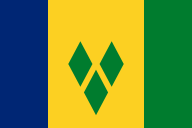
🇻🇨 Country Profile: Saint Vincent and the Grenadines
🌍 Introduction
Saint Vincent and the Grenadines is a Caribbean island country known for its volcanic mountains, island chain geography, and clear-water marine environments. Located in the eastern Caribbean Sea, it consists of the main island of Saint Vincent and a series of smaller islands and cays called the Grenadines. Its geography includes volcanic peaks, rainforests, beaches, and coral-rich coastal waters.
📌 General Overview
Official Name: Saint Vincent and the Grenadines.
Capital: Kingstown.
Official Language: English.
Government Type: Parliamentary monarchy.
Currency: East Caribbean Dollar (XCD).
Time Zone: Atlantic Standard Time (AST).
🗺️ Country-Specific Maps
Political maps show the two-part island structure and major settlements. Administrative maps present parish divisions on Saint Vincent and island districts in the Grenadines. Physical maps highlight volcanic mountains, coastal plains, and island chains. Marine maps show reefs, channels, and navigation zones. Transportation maps display roads, ports, airports, and ferry routes. Thematic maps often include tourism zones, land cover, and protected areas.
👥 Demography & Population
Saint Vincent and the Grenadines has an estimated population of about 110,000 people. Major population centers include Kingstown and nearby coastal towns on Saint Vincent. Smaller communities are spread across the Grenadine islands. Most residents live along coastal areas due to terrain and access.
🏛️ Administrative Divisions
The country is divided into parishes on Saint Vincent, along with administrative districts covering the Grenadine islands. Parish and island centers function as local administrative and service hubs. National authorities coordinate governance across the island chain.
💰 Economy & Industries
The economy is supported by tourism, agriculture, and services. Key sectors include resort tourism, yachting services, and crop production. Agricultural products include bananas, root crops, and tropical fruits. Fisheries and small-scale manufacturing also contribute.
🌟 Places of Interest & Tourism
Notable places include La Soufrière volcano, rainforest trails, black- and white-sand beaches, and the sailing destinations of the Grenadines. Popular attractions include island beaches, marine parks, and dive sites. Yacht and eco-tourism are major draws.
🚆 Transportation & Connectivity
Transportation is mainly road-based on Saint Vincent, with coastal highways linking towns. Ferries and boats connect the Grenadine islands. Airports operate on Saint Vincent and selected Grenadine islands. Seaports and marinas are important for passenger and yacht travel.
🌦️ Climate & Geography
Saint Vincent and the Grenadines has a tropical maritime climate with warm temperatures year-round and seasonal rainfall. Higher elevations receive more rain than coastal zones. The main island is volcanic and mountainous, while many Grenadines are lower and drier. Marine and coastal ecosystems are prominent.
📜 History & Culture
The country has a history shaped by Indigenous Caribbean peoples and colonial-era settlement. Cultural traditions include music, dance, festivals, and crafts with strong Caribbean influences. Community celebrations and maritime culture are important parts of identity.
📌 Quick Facts & Trivia
The country includes one large volcanic island and many smaller islands. La Soufrière is an active volcano. The Grenadines are known for sailing and yachting. Much of the population lives along the coast. Marine tourism is a key economic activity.