
Samoa
National Flag of Samoa
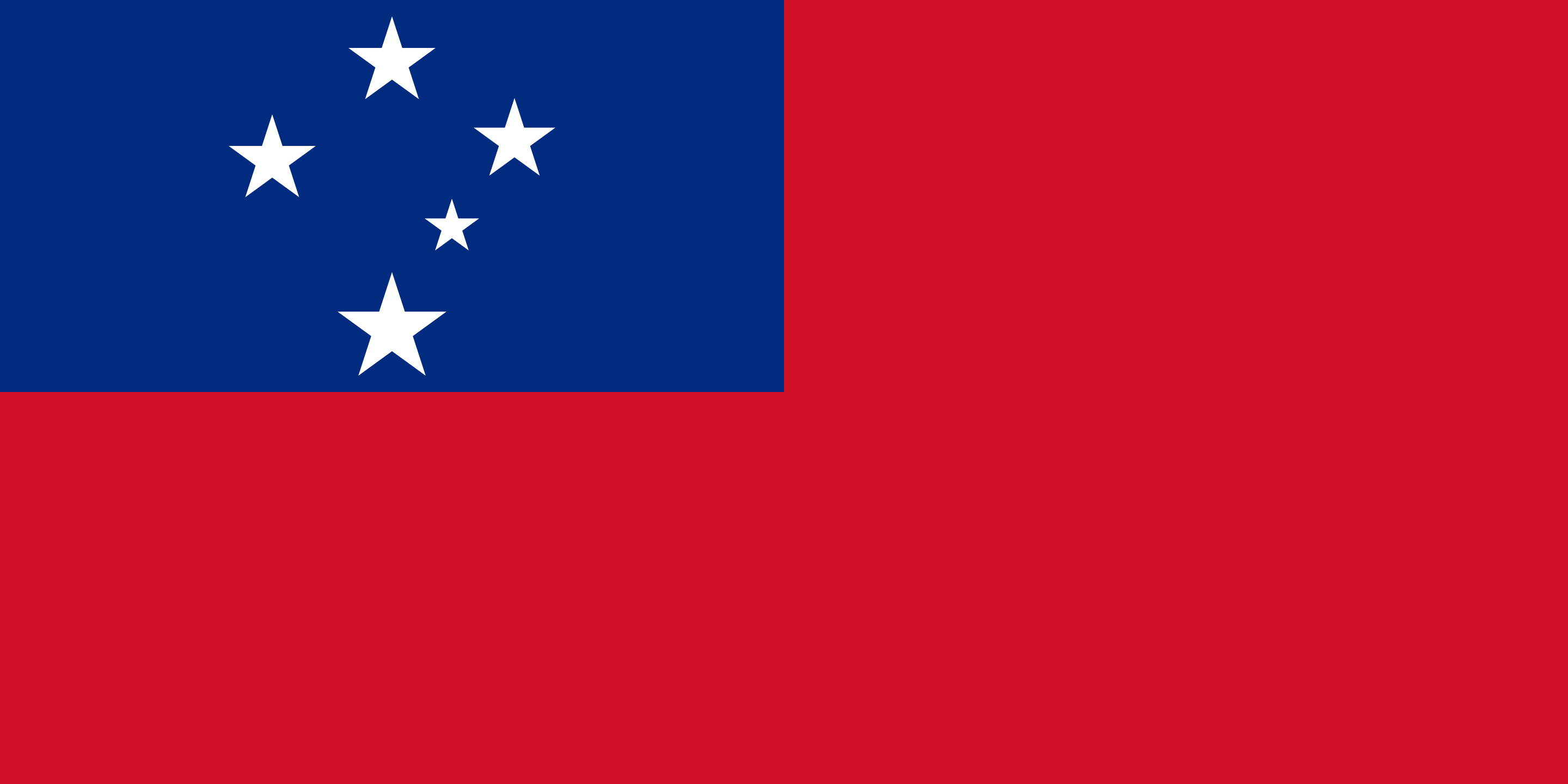
🇼🇸 Samoa: Country Profile
📌 Introduction
Samoa is a beautiful island nation located in the South Pacific Ocean. It is renowned for its tropical climate, stunning beaches, and vibrant culture. Samoa is known for its strong traditions, and it is home to some of the most picturesque landscapes in the Pacific region, including mountains, lush rainforests, and coral reefs.
🌍 General Overview
- Official Name: Independent State of Samoa
- Capital: Apia 🌆
- Largest City: Apia 🏙️
- Official Language: Samoan, English 🗣️
- Currency: Tala (WST) 💵
- Government: Parliamentary Republic 🏛️
- Area: 2,944 km² 🌍
- Population: ~200,000 (2025 est.) 👥
- Time Zone: UTC +13 ⏰
🗺️ Country-Specific Maps
Samoa is composed of two main islands, Upolu and Savai’i, along with several smaller islands. The islands feature lush forests, volcanic mountains, and beautiful beaches.
👥 Demography & Population
- Ethnic Groups:
- Samoan – 92%
- European – 3%
- Other Pacific Islanders – 5%
- Religions:
- Christianity (mainly Protestant, Catholic, and Congregationalist) – 99% ⛪
- Other – 1%
🏙️ Administrative Divisions
Samoa is divided into 11 districts, and it has a unique system of governance, where the villages play an important role in community life.
- A’ana
- Aiga-i-le-Tai
- Atua
- Fa’ase’ea
- Gaga’emauga
- Gagaifomauga
- Palauli
- Savai’i
- Tuamasaga
- Vaisigano
- Vailoa
💰 Economy & Industries
- Major Sectors: Agriculture 🌾, Tourism 🏖️, Fishing 🎣
- Top Exports: Coconut oil, fish, taro, cocoa 🍫
- GDP: ~$1.3 billion (2025 est.)
- Major Trade Partners: Australia 🇦🇺, New Zealand 🇳🇿, United States 🇺🇸
🌄 Places of Interest & Tourism
- To Sua Ocean Trench: A stunning natural swimming hole surrounded by lush gardens 🌊
- Mount Fiamoe: One of the highest peaks in Samoa, offering panoramic views 🏞️
- Lalomanu Beach: A picturesque beach famous for its white sand and clear waters 🏖️
- Papapapaitai Falls: A beautiful waterfall located on the island of Upolu 🌊
🚆 Transportation & Connectivity
- Main Airport: Faleolo International Airport (APW) ✈️
- Ferry Services: Connecting the islands of Samoa 🛥️
- Roads: Limited in rural areas but sufficient for local travel 🚗
🌦️ Climate & Geography
- Climate: Tropical, with a wet season from November to April 🌧️
- Geographical Features:
- Volcanic islands 🌋
- Lush rainforests 🌳
- Coral reefs and beaches 🏝️
🏛️ History & Culture
- Colonial History: Samoa was colonized by Germany and later became a protectorate of New Zealand until its independence in 1962.
- Independence: Samoa gained independence on January 1, 1962, becoming the first Pacific island nation to do so.
- Culture: The Samoan culture is deeply rooted in the Fa’a Samoa (Samoan way), a traditional system that focuses on communal living, respect for elders, and village councils.
- Famous Festival: Teuila Festival celebrates Samoan culture with dances, songs, and traditional games. 🎉
🍽️ Cuisine
- Taro and coconut are staple foods 🥥
- Palusami: A dish made of taro leaves, coconut cream, and sometimes meat 🥘
- Oka: A raw fish dish with coconut milk 🍣
📊 Quick Facts & Trivia
- Samoa is home to one of the most famous rugby teams in the world, the Manu Samoa. 🏉
- The Samoan language is one of the oldest languages in the Pacific region. 🗣️
- Samoa was the first country in the world to adopt the Western calendar’s New Year’s Day on January 1, 1900, and later switched to the opposite side of the International Date Line in 2011 to align with Australia and New Zealand. 🌍