
Sao Tome and Principe
National Flag of Sao Tome and Principe
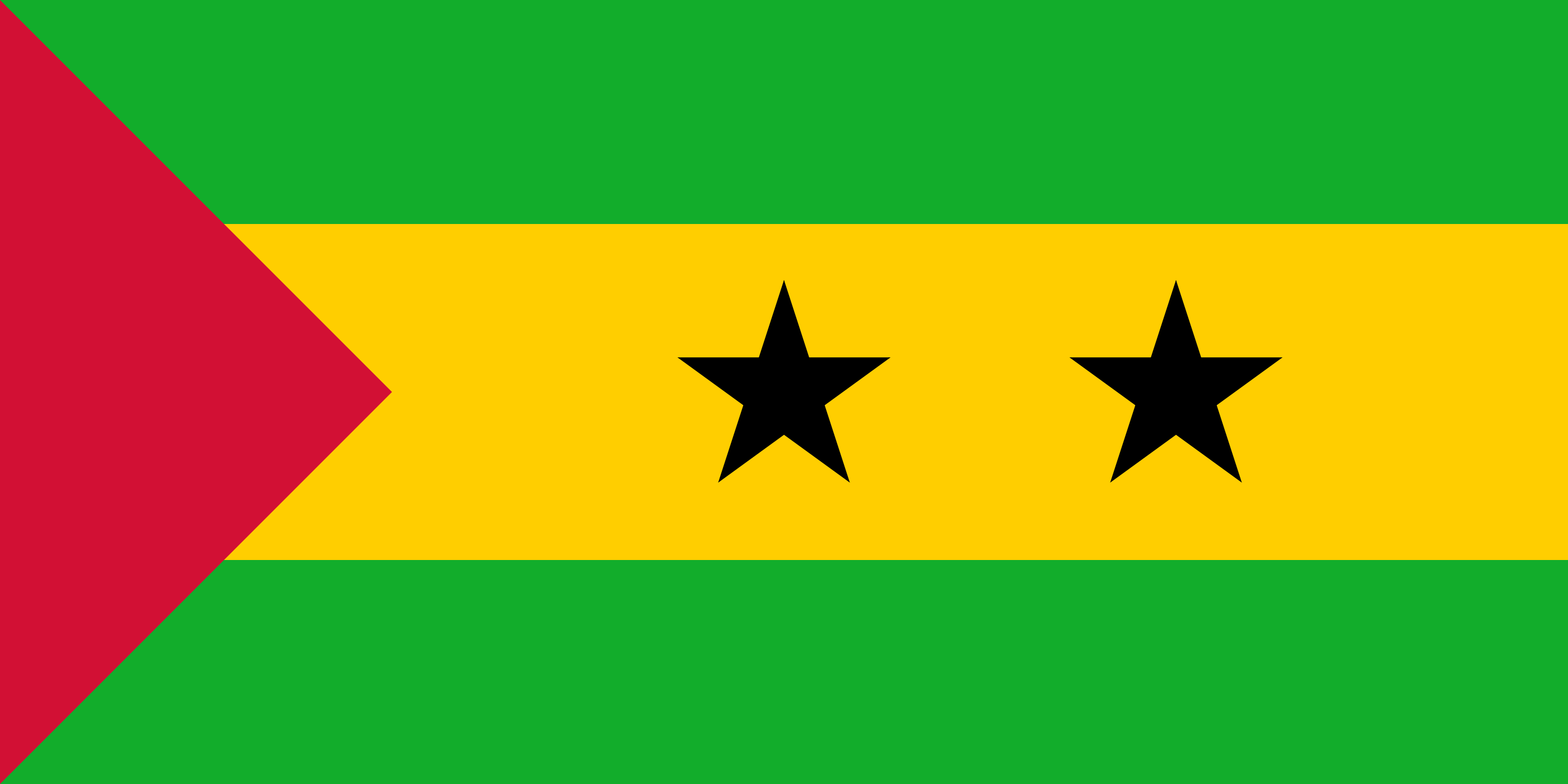
🇸🇹 Country Profile: Sao Tome and Principe
🌍 Introduction
Sao Tome and Principe is a small island country in the Gulf of Guinea known for its volcanic landscapes, tropical rainforests, and coastal ecosystems. Located off the west coast of Central Africa, it consists of two main islands and several smaller islets. Its geography includes volcanic peaks, dense forests, and narrow coastal plains.
📌 General Overview
Official Name: Democratic Republic of Sao Tome and Principe.
Capital: Sao Tome.
Official Language: Portuguese.
Government Type: Parliamentary republic.
Currency: Sao Tome and Principe Dobra (STN).
Time Zone: Greenwich Mean Time (GMT).
🗺️ Country-Specific Maps
Political maps show the two main islands and administrative districts. Administrative maps present districts and local areas on each island. Physical maps highlight volcanic mountains, rainforest cover, and coastal zones. Marine maps show surrounding waters and island spacing. Transportation maps display roads, ports, and airports. Thematic maps often include land cover, biodiversity zones, and protected areas.
👥 Demography & Population
Sao Tome and Principe has an estimated population of about 230,000 people. Most residents live on Sao Tome island, especially around the capital. Population distribution is concentrated in coastal areas. Rural communities are found near plantation and forest zones. Urbanization is moderate.
🏛️ Administrative Divisions
The country is divided into districts, with most located on Sao Tome island and one covering Principe as an autonomous region. District centers function as administrative and service hubs. Local authorities manage community services.
💰 Economy & Industries
The economy is supported by agriculture, fisheries, tourism, and services. Key crops include cocoa and other tropical products. Fishing and small-scale farming are important livelihoods. Tourism focused on nature and islands is growing.
🌟 Places of Interest & Tourism
Notable places include volcanic peaks, rainforest parks, beaches, and coastal formations. Principe island and protected forest areas are major attractions. Nature and eco-tourism are central themes.
🚆 Transportation & Connectivity
Transportation infrastructure includes coastal roads, seaports, and airports on the main islands. Road networks are limited but connect major settlements. Boats and small aircraft link the islands. There is no rail system.
🌦️ Climate & Geography
Sao Tome and Principe has a tropical maritime climate with warm temperatures and significant rainfall. Mountain areas receive heavier rain than coastal zones. The islands are volcanic in origin with rugged interiors. Forest ecosystems are widespread.
📜 History & Culture
The country has a history shaped by island settlement, plantation agriculture, and maritime trade. Cultural traditions include music, dance, and crafts influenced by African and Portuguese heritage. Community festivals and oral traditions are important.
📌 Quick Facts & Trivia
Sao Tome and Principe is one of Africa’s smallest countries by population. It is made up entirely of volcanic islands. Cocoa has historically been a major export crop. Much of the land is forest-covered. Principe has autonomous regional status.