
Syria
National Flag of Syria
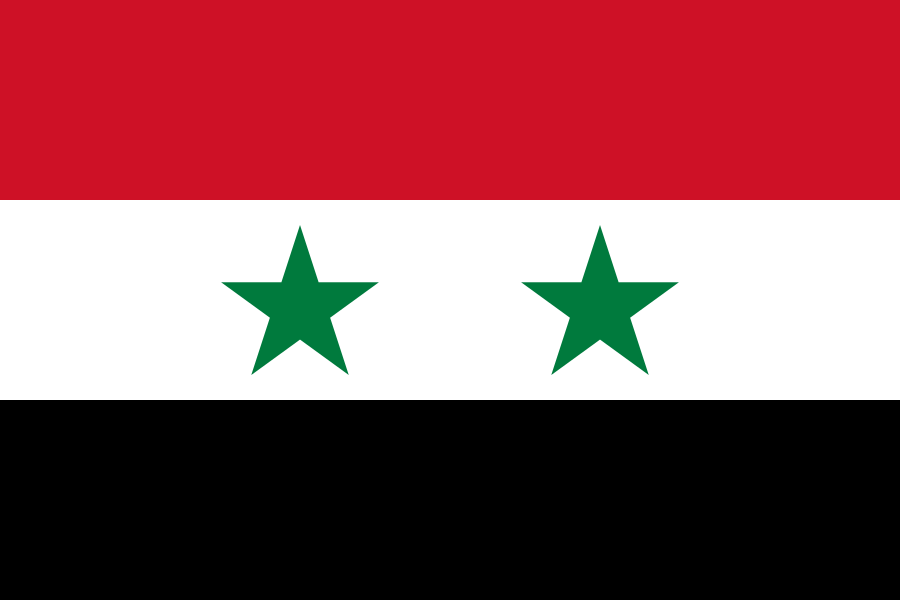
🇸🇾 Country Profile: Syria
🌍 Introduction
Syria is a country in Western Asia known for its ancient cities, archaeological heritage, and varied landscapes. Located at the crossroads of the eastern Mediterranean and inland Southwest Asia, it has been a center of civilization and trade for thousands of years. Its geography includes coastal plains, mountain ranges, steppe, and desert regions.
📌 General Overview
Official Name: Syrian Arab Republic.
Capital: Damascus.
Official Language: Arabic.
Government Type: Republic (current governance under central state authority).
Currency: Syrian Pound (SYP).
Time Zone: Eastern European Time (EET).
🗺️ Country-Specific Maps
Political maps show governorates, major cities, and international borders. Administrative maps present governorate and district divisions. Physical maps highlight coastal mountains, inland plains, and desert plateaus. Hydrology maps show major rivers and basins. Transportation maps display highways, rail lines, and border corridors. Thematic maps often include land use, elevation, and climate zones.
👥 Demography & Population
Syria has an estimated population of over 20 million people, though distribution has changed significantly in recent years. Major cities include Damascus, Aleppo, Homs, Hama, and Latakia. Population is concentrated in urban centers and more fertile western regions. The country includes multiple cultural and community groups.
🏛️ Administrative Divisions
Syria is divided into governorates, which are further subdivided into districts and subdistricts. Governorate capitals serve as administrative and service centers. Local administrative units manage municipal services.
💰 Economy & Industries
The economy has historically included agriculture, manufacturing, energy, and trade. Key agricultural products include wheat, olives, and cotton. Industry has included food processing, textiles, and basic manufacturing. Economic activity varies by region and infrastructure access.
🌟 Places of Interest & Tourism
Notable places include ancient cities, archaeological ruins, historic mosques, castles, and old market districts. Sites such as Damascus old city and Palmyra have long been recognized for historical value. Cultural heritage locations are widely distributed across the country.
🚆 Transportation & Connectivity
Transportation infrastructure includes road networks, rail lines, airports, and seaports on the Mediterranean coast. Highways connect major cities and border crossings. Ports support maritime access. Transport maps show key west–east and north–south corridors.
🌦️ Climate & Geography
Syria has a mostly arid to semi-arid climate, with Mediterranean conditions along the coast and drier conditions inland. Summers are generally hot and dry, while winters are cooler with more rainfall in western areas. Terrain ranges from coastal plains and mountains to interior steppe and desert.
📜 History & Culture
Syria has one of the longest continuous records of urban civilization in the world. Its cultural heritage includes architecture, crafts, literature, and scholarship. Historic cities and archaeological sites reflect many layers of ancient and medieval history.
📌 Quick Facts & Trivia
Some of the world’s oldest continuously inhabited cities are located in Syria. The country links Mediterranean and inland Asian geography. Olive cultivation has long been important. Historic trade routes crossed the region. Archaeological heritage sites are found in many areas.
Downloads
Download JSON file Download KML file Download Shapefile Download FlagTopics covered